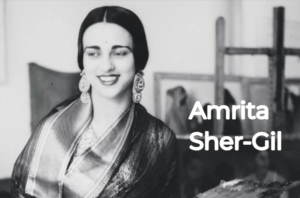
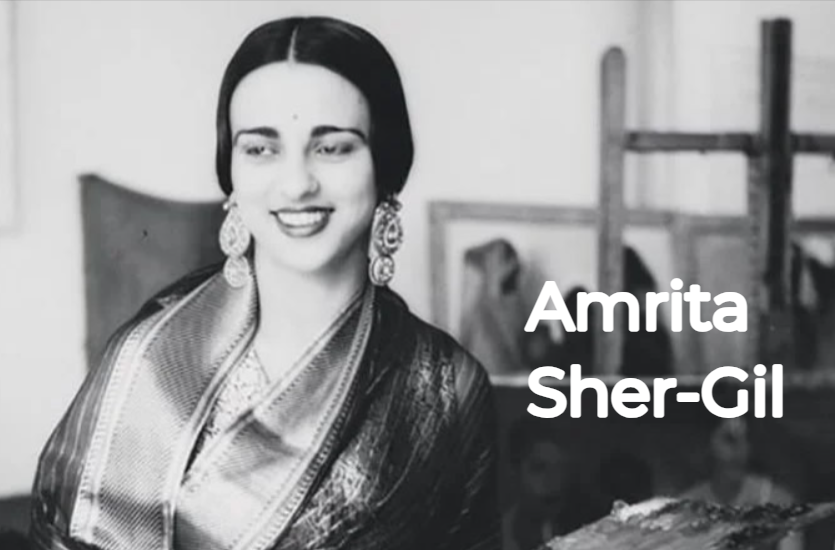
Amrita Sher-Gil (1913-41)
Amrita Sher-Gil was born of a Hungarian mother and a Sikh father. Amrita started drawing and painting in watercolors from the age of five, mainly illustrating Hungarian fairy tales.
At the age of eight, Amrita started lessons in art from one Major Whit marsh. She subsequently attended classes held by Beven Pateman, a fashionable society painter. In 1924 Amrita went to Italy with her mother for a brief period and attended an upper-class school in Florence before returning to India.
According to Vivan Sundaram (her nephew and a well-known painter in his own right), the drawings and watercolors Amrita did between the ages of eleven and fourteen (1924-1927) indicate a growing awareness of herself.
Although by 1927 Amrita had been in India for six years, the people and landscape in her drawings and watercolors are mainly European.
As Vivan Sundaram remarks, in her earlier works Amrita draws with a thin tremulous line, wistful maidens, naked and lost in forests.
In her later works, the characters, particularly the faces of women, seem extremely tense with suppressed emotion.
In 1927, Amrita’s maternal uncle, Ervin Baktay (who started his career as a painter but later became a renowned Indologist), arrived from Hungary and seeing Amrita’s passion for drawing and painting, encouraged her to draw from life models.
This was a new and fruitful experience for Amrita which she later acknowledged when she told him, ‘It is to you I owe my skill in drawing.’
In 1929, at the age of sixteen, Amrita accompanied her parents to Paris for systematic training in art. She painted and drew diligently, initially at the Grand Chaumiere under Pierre Vaillant and later at the Ecole des Beaux-Arts under Lucien Simon.
In the next three years, she made innumerable sketches and studies of male and female nudes, mainly in charcoal.
These studies reveal ‘her extraordinary artistic sensibility to perceive the plasticity of human form even at such a young age.
She emphasized volume by shading and used the ‘energetic sweep of the line’ to create massive forms of figures.
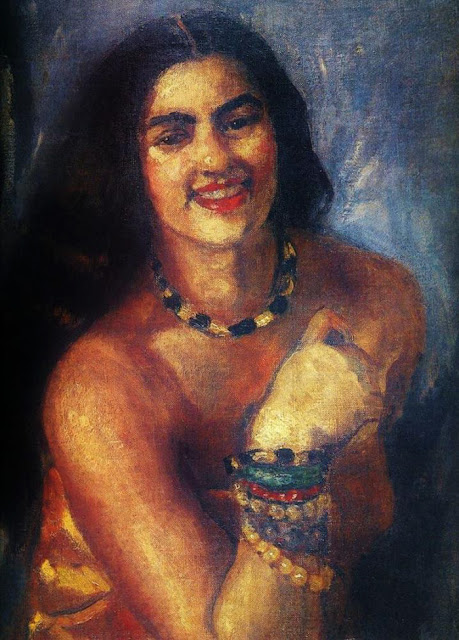
It was around 1930 that Amrita first started working in oils. She produced over sixty paintings—basically studies of models in the nude, besides a few still-life studies and self-portraits.
Significantly, she painted her own self against a flaming red background, perhaps to dramatically assert the individuality of her personality. She was greatly influenced by Cezanne, Gauguin, and Matisse.
In September 1934 Amrita wrote:
“Modern art has led me to the comprehension and appreciation of Indian Modern art has led me to the com French; painting and sculpture. TV-seems paradoxical but I know for certain that had we not come away to Europe, I should, perhaps, never have realized that a fresco from Ajanta or a small piece of sculpture in the Musee Guimet is worth more than the whole Renaissance.”
Haunted by an intense longing for India, Amrita returned back in 1935. During the next six years, before her sudden and tragic demise at the age Of 28, Amrita produced an important body of work.
She was greatly impressed and inspired by the traditional schools of Indian painting, such as Ajanta, and Rajput and Mughal miniatures. She, however, developed her own style, which, though not necessarily Indian in the traditional sense of the word, was ‘fundamentally Indian in spirit’.
Amrita had, by 1939, already developed her last and most mature style in which she executed some superb paintings. To quote Dr. Charles L Fabri: “The India which Amrita Sher-Gil painted was her own familiar country. At the age of nine, she came to live in the village of her uncle. And what she saw there impressed her more than anything else—the peasants with their sad .faces, with their dreamy lost look, the slow swaying gait. The peasants were not strange, odd creatures of another exotic world, but her own sisters and brothers… In her whole artistic ‘oeuvre’, Amrita Sher-Gil never painted a single Indian in action, running or gesticulating or dancing or rejoicing. All her figures are like her huge elephants or buffaloes—lazily lounging or placidly moving with gentle steps. Great dead walls, large, static trees add to the static peace and breathless silence of her work.”
Although many artists were rather skeptical about her art, she did receive a sympathetic response from critics like Karl Khandalavala, Herman Goetz, Charles Fabri, and Mulk Raj Anand. The distortion of figures in her art was cited as an instance of her inadequate drawing and ignorance of the Indian tradition.
But after her close study of Ajanta paintings, she had no problem in understanding that the Indian artist used figures not as an end but as a creative means.
She therefore successfully blended the Paris experience with the Indian. It was the study of modern art that led Amrita to the understanding and appreciation of the traditional Indian painting and sculpture.
Karl Khandalavala opined that Amrita’s art was a reaction against the Bengal School. Mulk Raj Anand considered her, ‘a genius of the first rank, one of the first of the few Indian painters to give a new direction to the art of our country.’
He admired her great talent in the organization of form and color with a contemporary sensibility. P R Ramachandra Rao thought that the striving for simplicity of forms in her paintings had all the ‘vitality of primitive art’.
KG Subramanyan remarked on the simultaneous juxtaposition of sensual delight and concern for poverty in her work.
Nevertheless, despite varying opinions about her work, there is no doubt that she was an extremely sensitive and emotional personality and possessed an extraordinary talent.
As N Bhuvanendran aptly remarked: She was a one-person crusader against academic realism on the one hand and revivalism on the other. Therefore, she felt the need to spell out her views on the absurdity of realism and the futility of slavishly imitating the mannerism of the art of the past. She lashes against the academic realists for their belief that the function of art is to reproduce objects faithfully without knowing that such a ‘cretinous’ and servile imitation is, in fact, an admission of the impotence of art. She had little difficulty in understanding that the copy, however, faithful it may be, will always be inferior to the original. Her biggest complaint against academic realism was its delimitation of the functions of art. The function of art is to liberate the imagination, not to shackle it. She has more reasons to find fault with academic realists because of modeling their art after the fifth-rate Western art. It is a testimony to her critical acumen that she wrote: ‘Compared to the best specimens of it, the worst samples of the Bengal School are works of genius.”
In all her compositions Amrita shows her great ability in ordering spaces with an absolutely clear vision.
All her compositions are wonderfully arranged in the given frame, leaving empty spaces just sufficient for the eye to rest upon, yet making the central subject of the painting prominent enough.
Such an inherent quality is reflected even in some of her earlier watercolors painted as a young girl, wherein the disposition of the figures is shown against a peaceful open space.
In Amrita Sher-Gil‘s six brief years of pictorial activity in India, her work created a new and vital artistic significance.
The blood, both of the East and the West running in her veins, made it natural for her to want to bridge the artistic vision of the West and that of India.
Infusing the traditional and the modern she became a milestone in the history of modern Indian painting.
‘Standing at the crucial period of Indian art she displayed a discernment uncommon in a person of her age to prophesy the trend of world art and note the points of confluence between Eastern and Western art.’
Books:
- Amrita Sher-Gil: A Life
- Amrita Sher-Gil: Art and Life – A Reader
- Amrita Sher–Gil – A Self–Portrait in Letters and Writings
- Amrita Shergil: The Immortal Girl
- Amrita Sher-Gil An Indian Artist Family of the Twentieth Century
- Amrita Sher Gil: A Painted Life
- Amrita Sher-Gil (Women in Art History
Read More About Famous Artists:
Somnath Hore, Dhan Raj Bhagat, Ramkinkar Vaij, Arpana Caur, Jai Zharotia, Gogi Saroj Pal, Vivan Sundaram, Manjit Bawa, Jatin Das, Biren De, Gulam Mohammad Sheikh, Arpita Singh, A Ramachandran, Om Prakash, Shanti Dave, Bishamber Khanna, Jagdish Swaminathan, Anjolie Ela Menon, Satish Gujral, G.R. Santosh
- One Piece Quiz
 One Piece Quiz Restart Quiz let currentQuestion = 0; let score = 0; const quizContainer … Read more
 - ‘काँगड़ा’ चित्र-शैली की विषयवस्तु तथा विशेषतायें
 ‘काँगड़ा’ चित्र-शैली का परिचय बाह्य रूप से समस्त पहाड़ी कला ‘काँगड़ा’ के नाम से अभिहित … Read more
 - ‘कॉकरोच’ से क्रांति तक: पोस्टरों और बैनरों की कला ने कैसे बदली एक पीढ़ी की आवाज़
 CJP आंदोलन सिर्फ राजनीतिक विरोध नहीं, बल्कि दृश्य कला और डिज़ाइन की एक नई भाषा … Read more
 - 100 MCQs for TGT / PGT ART (with answers)SECTION A — INDIAN ART (1–30) SECTION B — WESTERN ART (31–55) SECTION C — … Read more
- 100 MCQs for TGT/PGT ART(Answers provided at the end) SECTION A — INDIAN ART (1–25) SECTION B — WESTERN … Read more
- 12 Best Material For Outdoor Countertop
 Are you looking for the best material for outdoor countertops? If yes then you are … Read more
 - 12th के बाद Arts Student क्या करें — सम्पूर्ण गाइड12वीं Arts के बाद करियर, कोर्स और सरकारी नौकरी की सम्पूर्ण जानकारी हिंदी में। BFA, … Read more
- २. प्रमाण (माप और अनुपात)परिभाषा और मूल सिद्धांत प्रमाण शब्द संस्कृत की ‘प्र’ (उत्तम) और ‘माण’ (माप) से बना है, … Read more
- ३. भाव (भावनाओं की अभिव्यक्ति)परिभाषा और महत्व भाव चित्रकला का सबसे महत्वपूर्ण, प्राणवान और हृदयस्पर्शी तत्व है। संस्कृत में ‘भाव’ … Read more
- ४. लावण्य योजना (सौंदर्य और अनुग्रह)परिभाषा और सार लावण्य योजना चित्रकला का वह दिव्य और सूक्ष्म तत्व है जो चित्र में … Read more
- ५. सादृश्य (समानता और यथार्थता)परिभाषा और सार सादृश्य संस्कृत के ‘स’ (साथ) और ‘दृश्य’ (दिखाई देना) से बना है, जिसका … Read more
- ६. वर्णिका भंग (रंगों का मिश्रण और प्रयोग)Color blending (mixing and using colors) परिभाषा और सार वर्णिका भंग संस्कृत के ‘वर्णिका’ (रंग) और … Read more
- 80 PAINTING MCQs For TGT/PGT ART1. Which painting technique uses pigments mixed with hot wax? A. GouacheB. EncausticC. TemperaD. OilAnswer: … Read more
- A R Chughtai | Biography | Life | Paintings
 A R Chughtai (1899-1975) The last artist of the Chughtai family, Mohd. Abdul Rehman Chughtai, … Read more
 - Abindranath Tagore: The Painter’s Perspective
 Abanindranath Tagore, a renowned artist and member of the prestigious Tagore family, left an indelible … Read more
 - Ajanta Art QuizAjanta Art Quiz Restart Quiz let currentQuestion = 0; let score = 0; const quizContainer … Read more
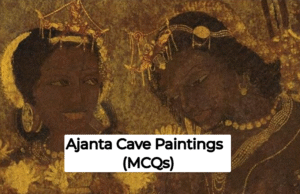
- Ajanta Cave Paintings (MCQs)
 100 multiple choice questions (MCQs) about Ajanta Cave Paintings, divided into categories 🏛️ General Information 🕰️ Historical Context 🖌️ Art … Read more
 - Aluminum or Steel: Which is Better For Outdoor Furniture
 Summer is almost here. As the sun shines bright and warm, many homeowners want outdoor … Read more
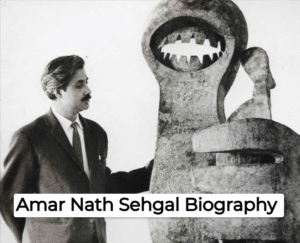
 - Amar Nath Sehgal Biography, Childhood, Life, Artworks, Media, Awards, Exhibitions, Career + Legacy Guide + Top 15 Insights
 Amar Nath Sehgal (b. 1922) A philosopher, poet, artist and craftsman, Amar Nath Sehgal’s unique … Read more
 - Amrita Sher-Gil | Biography | Life | Paintings
 Amrita Sher-Gil (1913-41) Amrita Sher-Gil was born of a Hungarian mother and a Sikh father. Amrita … Read more
 - Ancient Tribal Art of MaharashtraMaharashtra—a vast state stretching from the Arabian Sea coast through the Deccan plateau to inland … Read more
- Anupam Sud Biography | Life, artworksAnupam Sud (b.1944) Anupam Sud, an outstanding graphist, has adopted printmaking, not only for artistic … Read more
- Anupam Sud Biography: Untold Legacy & 15 Insightful Facts About the Iconic PrintmakerAnupam Sud Biography explores the life, legacy, and powerful impact of one of India’s most … Read more
- Anupam Sud’s Contribution to Women in ArtAnupam Sud holds a unique and powerful place in the history of Indian art, particularly … Read more
- Architectural Backgrounds in Indian Miniature Art Style
 Explore the beauty of architectural backgrounds in Indian miniature art style, their historical significance, techniques, … Read more
 - Art — An Introduction
 What is Art — An Introduction (Indian Context) Art is a technique to complete work … Read more
 - Art History of India: Ancient to ModernThe artistic heritage of India spans over 5,000 years, reflecting the subcontinent’s rich cultural, religious, … Read more
- ART PEDAGOGY — 100 MCQs1. The primary aim of art education is to— A) Train professional artistsB) Develop aesthetic … Read more
- Art Pedagogy & Teaching MethodsArt education transforms lives by developing creativity, critical thinking, visual literacy, and self-expression. Effective art … Read more
- Art quizFamous Paintings and Artists Quiz NEXT let currentQuestion = 0; const quizContainer = document.getElementById(“quiz”); const … Read more
- Art Student होने पर शर्म क्यों? — Arts में Career Scope की पूरी सच्चाईArts student career scope जानिए पूरी detail में — government jobs, graphic design, animation, IAS, … Read more
- Attack On Titan Quiz
 Attack on Titan Quiz Restart Quiz let currentQuestion = 0; let score = 0; const … Read more
 - B.Ed Art Mock Test — 100 प्रश्न | Complete Practice SetB.Ed Art Mock Test में 100 MCQ प्रश्न हिंदी में — कला सामान्य ज्ञान, शिक्षण … Read more
- B.Ed Art PYQ 5 साल — 2020 से 2025 तक के हल सहित प्रश्नB.Ed Art PYQ 5 साल का संपूर्ण संकलन — 2020-21 से 2024-25 तक के हल … Read more
- B.Ed Art के 50 महत्वपूर्ण प्रश्न | B.Ed Art 50 Important Questions in HindiB.Ed Art के 50 महत्वपूर्ण प्रश्न और उत्तर हिंदी में पढ़ें। कला शिक्षा के मूल … Read more
- B.Ed Art परीक्षा MCQ 2026 | 100 महत्वपूर्ण प्रश्न उत्तर सहितB.Ed Art परीक्षा 2026 के लिए 100 महत्वपूर्ण MCQ प्रश्न उत्तर सहित। Lowenfeld के 6 … Read more
- Best Fabric for Outdoor FurnitureThese days, folks are using outside spaces like patios as work spots. Due to quarantines, … Read more
- Best Material for Garden Furniture
 Are you looking for the best material for garden furniture? If yes then you are … Read more
 - Best Outdoor Furniture Material For Rain
 Are you looking for the best outdoor furniture material for rain? If yes then you … Read more
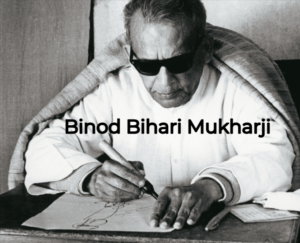
 - Binod Bihari MukharjiBinod Bihari, who also had literary interests possessed an intellectual curiosity that led to an analytical … Read more
- BJP vs Congress — दोनों ने Indian Art को कैसे Use किया?जानिए कैसे BJP और Congress ने Indian Art को political tool की तरह use किया … Read more
- Blox Fruits Quiz
 Blox Fruits Quiz NEXT RESTART QUIZ let currentQuestion = 0; let score = 0; const … Read more
 - Blox Fruits QuizBlox Fruits Quiz Restart Quiz let currentQuestion = 0; let score = 0; const quizContainer … Read more
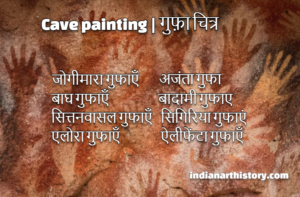
- Cave painting | गुफ़ा चित्र
 गुहा चित्रण (जोगीमारा, अजन्ता, बाघ, बादामी, एलोरा, सित्तनवासल इत्यादि) जोगीमारा गुफाएँ Join our WhatsApp channel … Read more
 - Characteristics of Ellora Paintings
 Ellora Paintings It is called Verulleni or Verul Caves in Marathi which is only 9 … Read more
 - COLOUR THEORY — 100 MCQs1. Primary colours in pigment (RYB) are— A) Red, Yellow, BlueB) Red, Green, BlueC) Cyan, … Read more
- Dalit Art Movement भारत — जो इतिहास की किताबों में नहीं हैजानिए Dalit Art Movement भारत का पूरा इतिहास — Ambedkar era से लेकर आज की … Read more
- Drawing & Painting TechniquesMastering drawing and painting requires understanding fundamental techniques that have been refined over centuries. Whether you’re a beginner or advancing your skills, these core methods form the foundation of visual art.
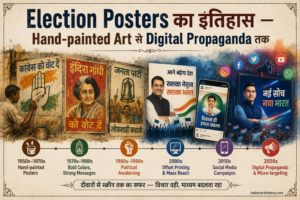
- Election Posters का इतिहास — Hand-painted Art से Digital Propaganda तकElection Posters का इतिहास — जानिए भारत में Election Posters के इतिहास की पूरी कहानी … Read more
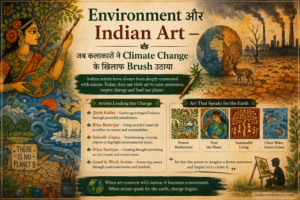
- Environment और Indian Art — जब कलाकारों ने Climate Change के खिलाफ Brush उठायाEnvironment और Indian Art—जानिए कैसे Indian artists ने Warli, Gond और Contemporary Art के जरिए … Read more
- F.N. Souza Biography: Life, Art, and Legacy of a Modernist RebelIntroduction Ever heard of an artist who painted saints and sinners with the same passion? … Read more
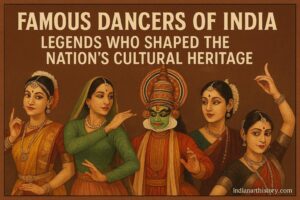
- Famous Dancers of India: India’s Legendary Performers Who Transformed the World of DanceIndia’s dance heritage is one of the richest artistic traditions in the world. From temple courtyards to global stages, Indian dancers have carried forward centuries-old cultural practices while shaping new forms of artistic expression.
- Famous Dancers of India: Legends Who Shaped the Nation’s Cultural HeritageDiscover the most famous dancers of India, their contributions, classical dance forms, and lasting legacy. Explore icons of Bharatanatyam, Kathak, Odissi, and more.
- Feminist Art in India — महिलाओं ने Canvas पर जो लड़ाई लड़ीFeminist Art India महिला कलाकारों की पूरी कहानी — Amrita Sher-Gil से Nalini Malani तक, … Read more
- Gaganendranath Tagore Biography | Life, Paintings
 Gaganendranath Tagore (1867-1938) Gaganendranath Tagore, eldest brother of Abanindranath Tagore, was only seventeen years of … Read more
 - Gaming Characters Quiz
 Gaming Characters Quiz Restart Quiz let currentQuestion = 0; let score = 0; const quizContainer … Read more
 - General Knowledge of Art & CultureUnderstanding art and culture requires recognizing how creative expression reflects and shapes human experience across time and geography. This knowledge encompasses diverse traditions, movements, cultural contexts, and the interconnections between artistic practice and society.
- GK QuizModern Art Quiz Restart Quiz // Additional 15 questions on Modern Art { question: “Who … Read more
- Historical Art Quiz
 Historical Art Quiz Restart Quiz let currentQuestion = 0; let score = 0; const quizContainer … Read more
 - Hitler एक Painter था — और Reject होने के बाद क्या हुआ?जानिए कैसे Adolf Hitler ने Vienna Academy of Fine Arts में दो बार Rejection झेली, … Read more
- How Art Reflects Society and Culture Quiz
 How Art Reflects Society and Culture Quiz Restart Quiz let currentQuestion = 0; let score … Read more
 - How To Choose Best Material for Outdoor Furniture?
 Are you looking for the best material for outdoor furniture? If yes then you are … Read more
 - How to Identify an Original Jamini Roy PaintingJamini Roy’s paintings are highly valuable, and many forgeries exist in the market. If you’re … Read more
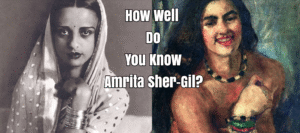
- How Well Do You Know Amrita Sher-Gil?
 Quiz: How Well Do You Know Amrita Sher-Gil? Start Quiz Next Your Score: /20 Restart … Read more
 - How Well Do You Know Amrita Sher-Gil?Question 1 Amrita Sher-Gil is known as:A) The Queen of Mughal ArtB) The Pioneer of … Read more
- How Well Do You Know Dragon Ball Z | Quiz
 Dragon Ball Z Quiz Restart Quiz let currentQuestion = 0; let score = 0; const … Read more
 - How Well Do You Know Naruto Uzumaki
 Naruto Quiz Restart Quiz let currentQuestion = 0; let score = 0; const quizContainer = … Read more
 - Impressionism
 The first important movement of modern painting in Europe is Impressionism. It was mainly prevalent … Read more
 - Indian Mythology QuizIndian Mythology Quiz Restart Quiz let currentQuestion = 0; let score = 0; const quizContainer … Read more
- Jamini Roy Biography | Life and Paintings
 Jamini Roy (1887-1972) As early as the 1930s, Jamini Roy had anticipated the current vogue … Read more
 - Jamini Roy: Life, Legacy, and Notable Works
 Jamini Roy (1887–1972) was a pioneering modern Indian artist known for his rejection of Western … Read more
 - Jamini Roy: Personal Influences, Artistic Journey, and Exhibitions
 Jamini Roy (1887–1972) was a revolutionary Indian artist who redefined modern Indian art by embracing … Read more
 - Jamini Roy’s Artistic Techniques and Influences
 Jamini Roy (1887–1972) is one of India’s most celebrated modern artists. His work was deeply … Read more
 - Jamini Roy’s Influence on Modern Art Movements and a Detailed Look at His Iconic Paintings
 Jamini Roy (1887–1972) was a revolutionary artist who transformed Indian modern art by embracing folk … Read more
 - Jamini Roy’s Influence on Modern Indian Art and Notable PaintingsJamini Roy (1887–1972) is one of the most influential figures in modern Indian art. His … Read more
- Jamini Roy’s Notable Paintings and Artistic TechniquesJamini Roy (1887–1972) is known for his bold, simplified figures, strong black outlines, and earthy … Read more
- Jamini Roy’s Painting Techniques and the Value of His Art TodayJamini Roy (1887–1972) revolutionized modern Indian art by incorporating folk traditions, bold colors, and simplified … Read more
- K. G. Subramanyan BiographyK.G. Subramanyan, a prolific contemporary artist, was a painter, a muralist, designer, printmaker, toymaker, weaver and also … Read more
- Kalipada Ghoshal: Master of Bengali Modernism and Tempera PaintingKalipada Ghoshal was born on May 17, 1906, in Jodhpur Park, Calcutta (now Kolkata), West Bengal, into a middle-class Bengali family during a period of extraordinary cultural ferment in Bengal. His birth came just one year after the controversial partition of Bengal by the British colonial government, an event that galvanized Bengali cultural and political consciousness and contributed to the Swadeshi movement’s emphasis on indigenous culture and traditions.
- Kangra Chitrakala MCQs – 100 बहुविकल्पीय प्रश्न हिंदी में उत्तर सहित 2026कांगड़ा चित्रकला ( Kangra Chitrakala MCQs ) के 100 बहुविकल्पीय प्रश्न उत्तर सहित। इतिहास, विशेषताएं, … Read more
- Krishen Khanna BiographyKrishen Khanna is known for his figurative approach. His later paintings around (1990) are revolutionary … Read more
- Location Tracker App: Just Enter a Mobile Number and See Anyone’s Live Location—Right on Your Phone!Learn how to use Google Maps as a free Location Tracker App—no subscription, zero cost, … Read more
- Longest Lasting Outdoor Furniture Material
 Are you looking for the longest-lasting outdoor furniture material? If yes then you are at … Read more
 - LT Grade Art Previous Year Questions | UP LT ग्रेड कला परीक्षा: पिछले वर्षों के महत्वपूर्ण प्रश्न एवं उत्तरUP LT ग्रेड कला परीक्षा के पिछले वर्षों के प्रश्न एवं विस्तृत उत्तर — भारतीय … Read more
- LT Grade Art Result 2026 — What Next? | Document Verification से Joining तक पूरी GuideLT Grade Art Result 2026 check करें और जानें — document verification process, merit list … Read more
- M.F. Husain Biography | Controversy, Paintings
 M.F. Husain 1915-2010 M. F. Husain has become the symbol of modern Indian art with … Read more
 - Major Artists of the Mughal CourtIntroduction to Mughal Court Painting When we talk about Indian miniature painting, one name shines … Read more
- Major Artists of the Mughal Court: Legendary Masters Who Defined an EmpireMajor artists of the Mughal court shaped India’s greatest miniature painting tradition, blending Persian finesse with Indian realism under imperial patronage.
- Make Money Selling AI Art: $3,400 With Free Tools GuideLearn how I earned $3,400 in 2 years selling AI art on Etsy and stock … Read more
- MCQs – Mughal School of Painting1. The Mughal School of Painting developed as a fusion of which two major art … Read more
- MCQs for TGT / PGT ART (with answers)Topic-wise sets (painting, sculpture, pedagogy, colour theory, Indian art) SET 1 — PAINTING (20 MCQs) … Read more
- MF Hussain Painting and Madhuri Dixit: A Captivating Fusion of Art and BollywoodExplore the iconic MF Hussain paintings of Madhuri Dixit and the deep artistic connection between … Read more
- MF हुसैन जीवनी | भारत के पिकासो की कहानी | Indian Art HistoryMF हुसैन जीवनी (मकबूल फ़िदा हुसैन) की सम्पूर्ण जीवनी — जन्म, कला शिक्षा, प्रमुख पेंटिंग्स, … Read more
- MF हुसैन ने जूते क्यों नहीं पहने — असली कहानी और अनसुने किस्सेजानिए MF हुसैन जूते क्यों नहीं पहनते थे — बचपन की गरीबी, कला के प्रति … Read more
- Mine Craft QuizMinecraft Quiz NEXT RESTART QUIZ NEXT: Mine Craft Quiz Can You Name These Iconic Actors? … Read more
- Miniature elements in modern Indian art
 Miniature is a beautiful step of medieval Indian painting. The paintings that started first on … Read more
 - Modern Art QuizModern Art Quiz NEXT let currentQuestion = 0; const quizContainer = document.getElementById(“quiz”); const nextBtn = … Read more
- Modern art quizModern Art Quiz NEXT let currentQuestion = 0; const quizContainer = document.getElementById(“quiz”); const nextBtn = … Read more
- Modern Art vs Classical Art QuizModern Art vs Classical Art Quiz Restart Quiz let currentQuestion = 0; let score = … Read more
- Most Comfortable Outdoor ChairAt times, sitting in a nice chair outdoors on a sunny day can be a … Read more