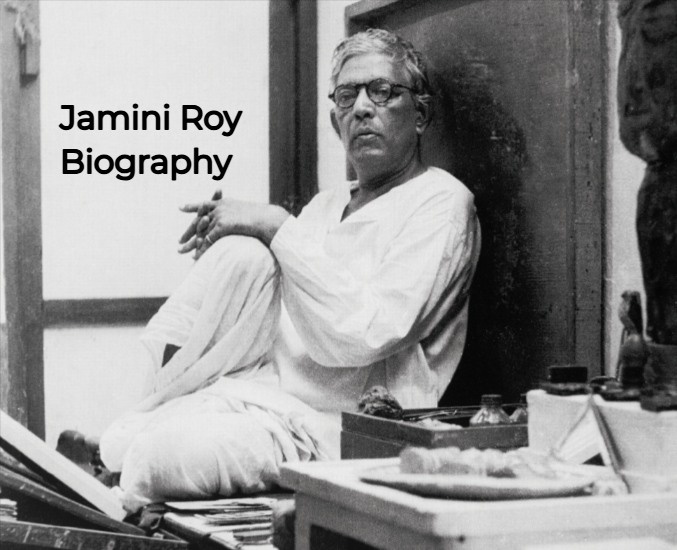
Table of Contents
Jamini Roy (1887-1972)
As early as the 1930s, Jamini Roy had anticipated the current vogue amongst the artists to draw upon folk-art in fashioning artwork.
He attempted to create a distinct indigenous style in seeking inspiration from folk-art traditions as against the elitist approach of the Bengal School.
He found a quality of freshness, directness, and robustness in the artistic spirit that still survived in the scrolls, the bazaar paintings of Kalighat, in the Puja images, in toys and dolls and the hordes of artifacts created for rituals—all synthesized with the visual effects of kanthas and alpanas.
He abandoned his interest in portraiture in oils and the ‘wistful sentimentality’ of Abanindranath’s style after 1910.
He was attracted to the folk- art sources, adopting not only the freest possible manner, characteristic of native folk arts, to shape the figures in his works, but also formal ideas from Orissan and Jain manuscript illustrations of the medieval period.
After the mid-1920s he adopted an increasing use of firm and majestic curves and simple forms. He also changed his palette to mineral and vegetable dyes popularly used in villages, so as to fully identify with the village ethos.
His style, however, gradually became more decorative than poetic or sensuous. He moved away from Kalighat, although he retained some of its characteristics like the large eyes and the oval faces.
In some of his works Of the early 1930s, the stress is on the vertical rigid forms reminiscent of Byzantine icon paintings.
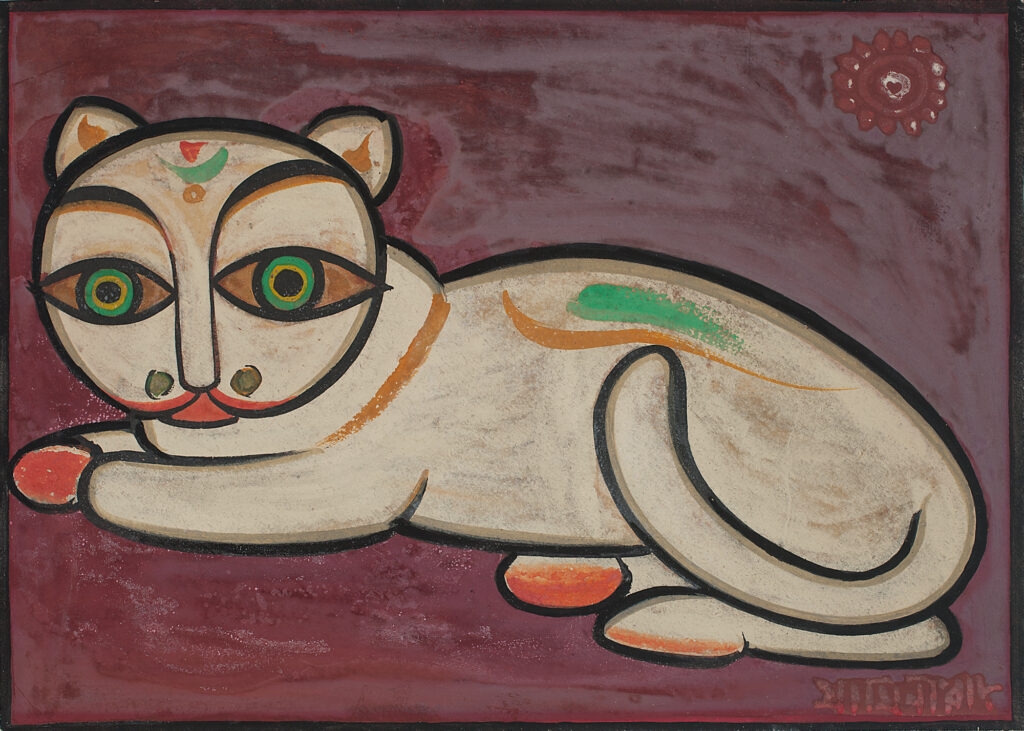
His paintings on the theme of Christ and the satirical paintings of animals, like those of cats with protruding eyes, clearly show the influence of the Jain School.
But, by and large, his paintings are marked by the conventional features of the native folk paintings, i.e. the flattening out of design in-depth, and of voluminous and otherwise massive forms, by omitting light and shade, and use of pure and positive colors in the interaction of their tonal quality and strength.
Jamini Roy’s paintings are a sheer expression of rhythmic lines drawn with curved and elliptic sweeps that define the robust forms of his figures.
He seems to be subordinating everything to the repetitive decorative rhythm in his panel pictures but not in his sketches, some of which are powerful spontaneous expressions.
He added an element of subtlety and sophistication to the simplistic painting of Kalighat, resulting in a strongly individualistic style.
One may wonder why Jamini Roy adopted a style based on folk-art, which, as is well known, he did after a great deal of heartsearching.
Starting his career as a portrait painter in the Western academic tradition and later experimenting with impressionism, he, subsequently discontinued both.
And though the Bengal School was then in the ascendant, he found it too eclectic to be attracted to it.
To overcome this stalemate in the art scene of that time, he strove to strike a new path by turning to native folk-art traditions wherein he discovered the art impulses and genius of his own people.
He, however, did not foresee that the folk-art style he adopted would, in course of time, lead him into a blind alley.
For, unfortunately, his enthusiastic endeavor to strive for Indianness resulted in a ‘factory’ producing Jamini Roys for the elite.
Though artistic control plays a quiet but crucial role in Jamini Roy’s paintings, it raises questions about the significance of creativity in art.
In his search for finding an identity, he styled his artistic activities as a ‘Patua’—the Bengal folk painter. For, he compared his free repetitious approach to that of the ‘Patua’.
Jamini Roy’s stimulus-response model is based on emotionally charged and decorative religious content which, though necessary, is not sufficient for creative expression.
Mere sensation ‘furnishes’ the mind with nothing whatsoever; it leaves no legible character on the ‘white paper’ within us.
For, art is an expression of a totally imaginative creative experience. How- ever, Jamini Roy’s art had nationalistic significance, especially when India was trying to free itself from the clutches of the political and cultural influences of the West.
No one, perhaps, knows with certainty whether Jamini Roy was heading in the right direction; for no one has subsequently followed his approach or style concertedly.
How far his explorations of the aesthetic norms of folk- art were successful in reviving the spirit of indigenous art traditions is a debatable question.
And how valid are the aesthetic norms of bygone days for artistic expression today, especially when the present-day artist faces a vast array of material, styles, and traditions all of which are equally internationally valid? Perhaps time only will decide whether Jamini Roy’s pursuit of artistic labor was successful or not.
Be that as it may, we must remember that Jamini Roy was the first artist to prominently and creatively use folk-art at a time when more and more Indian artists were attracted to alien art forms.
Here are some of Jamini Roy’s famous paintings, including their year, media, and name:
| Painting Name | Year | Media |
|---|---|---|
| Bride and Two Companions | 1940s | Tempera on Cardboard |
| Krishna and Balarama | 1940s | Tempera on Paper |
| Mother and Child | 1940s | Tempera on Cloth |
| Three Pujarinis | 1950s | Tempera on Board |
| Santal Boy with Drum | 1935 | Tempera on Canvas |
| Gopini | 1940s | Tempera on Paper |
| St. Ann and the Blessed Virgin | 1945 | Tempera on Canvas |
| Cats Sharing a Prawn | 1940s | Tempera on Canvas |
| Ravana, Sita, and Jatayu | 1940s | Tempera on Cloth |
| Ramayana Series | 1940s | Tempera on Paper |
| Queen on Tiger | 1930s | Tempera on Paper |
| Makara and a Flock of Fish | 1940s | Tempera on Board |
| Radha and Krishna | 1940s | Tempera on Cloth |
| Seated Woman with Hookah | 1940s | Tempera on Board |
| Chaitanya and His Followers | 1940s | Tempera on Cloth |
| Woman in White Sari | 1940s | Tempera on Canvas |
| Blue Krishna with Gopis | 1940s | Tempera on Board |
| Woman Holding a Lotus | 1950s | Tempera on Canvas |
| Ganesh Janani | 1940s | Tempera on Cloth |
| Dancing Ganesha | 1940s | Tempera on Board |
Jamini Roy was known for his use of earthy colors, bold outlines, and influence from folk art, especially Kalighat paintings.
Chart of Jamini Roy’s paintings from the 1930s, including their year, media, and name:
| Painting Name | Year | Media |
|---|---|---|
| Queen on Tiger | 1930s | Tempera on Paper |
| Santal Boy with Drum | 1935 | Tempera on Canvas |
| Woman with Pitcher | 1930s | Tempera on Board |
| Seated Woman in Sari | 1930s | Tempera on Cloth |
| Mother and Child | 1930s | Tempera on Canvas |
| Woman Holding a Bird | 1930s | Tempera on Paper |
| Dancing Girl | 1930s | Tempera on Board |
| Baul Musician | 1930s | Tempera on Cloth |
| Krishna with Cows | 1930s | Tempera on Paper |
Jamini Roy’s 1930s works marked his transition from Western-style academic painting to a more folk-art-inspired style, using bold lines and natural pigments.
Chart of Jamini Roy’s paintings from the 1940s, including their year, media, and name:
| Painting Name | Year | Media |
|---|---|---|
| Bride and Two Companions | 1940s | Tempera on Cardboard |
| Krishna and Balarama | 1940s | Tempera on Paper |
| Mother and Child | 1940s | Tempera on Cloth |
| Gopini | 1940s | Tempera on Paper |
| Cats Sharing a Prawn | 1940s | Tempera on Canvas |
| Ravana, Sita, and Jatayu | 1940s | Tempera on Cloth |
| Ramayana Series | 1940s | Tempera on Paper |
| Makara and a Flock of Fish | 1940s | Tempera on Board |
| Radha and Krishna | 1940s | Tempera on Cloth |
| Seated Woman with Hookah | 1940s | Tempera on Board |
| Chaitanya and His Followers | 1940s | Tempera on Cloth |
| Woman in White Sari | 1940s | Tempera on Canvas |
| Blue Krishna with Gopis | 1940s | Tempera on Board |
| Ganesh Janani | 1940s | Tempera on Cloth |
| Dancing Ganesha | 1940s | Tempera on Board |
During the 1940s, Jamini Roy fully embraced the folk art style, using natural pigments, simplified forms, and strong outlines inspired by Kalighat paintings.
Chart of Jamini Roy’s paintings from the 1950s, including their year, media, and name:
| Painting Name | Year | Media |
|---|---|---|
| Three Pujarinis | 1950s | Tempera on Board |
| Woman Holding a Lotus | 1950s | Tempera on Canvas |
| Black Horse | 1950s | Tempera on Paper |
| Dancing Figure | 1950s | Tempera on Cloth |
| Mother and Child | 1950s | Tempera on Board |
| Krishna with Flute | 1950s | Tempera on Paper |
| Woman with Flower | 1950s | Tempera on Canvas |
By the 1950s, Jamini Roy had fully established his folk-art-inspired style, using bold colors, simplified figures, and themes from rural life and mythology.
Chart of Jamini Roy’s paintings from the 1960s
Jamini Roy’s artistic peak was between the 1930s and 1950s, and he created fewer notable works in the 1960s. However, here are some of his paintings from that period:
| Painting Name | Year | Media |
|---|---|---|
| Woman with Red Bindi | 1960s | Tempera on Board |
| Mother and Child | 1960s | Tempera on Paper |
| Krishna with Gopis | 1960s | Tempera on Cloth |
| Santal Couple | 1960s | Tempera on Canvas |
| Seated Woman in Blue Sari | 1960s | Tempera on Board |
By the 1960s, Jamini Roy had already received national recognition for his contribution to Indian modern art, and his works continued to reflect folk traditions and mythology.
Jamini Roy continued his folk-art-inspired style in the 1960s, focusing on themes of rural life, mythology, and simplicity. His works during this period maintained his signature use of bold outlines, earthy colors, and tempera on materials like paper, board, and cloth.
Many of his paintings from this time were variations of his earlier works, as he refined and repeated themes such as Mother and Child, Krishna with Gopis, and Santal Life.
In the 1960s, Jamini Roy continued to refine his unique folk-art style, drawing inspiration from traditional Kalighat paintings, Bengali folk art, and rural life. His works from this period followed the same artistic principles he had developed earlier but with more emphasis on simplification, minimalism, and repetition of themes.
Key Features of Jamini Roy’s Art in the 1960s:
- Bold Black Outlines: He used thick, strong outlines to define figures, much like traditional Indian folk art.
- Limited Color Palette: His colors were mostly earthy tones, including ochre, red, blue, green, and white, often made from natural pigments.
- Religious and Folk Themes: He focused on Hindu mythology (Krishna, Radha, Gopis), rural Bengali life (Santal couples, musicians, and dancers), and mother-child relationships.
- Use of Traditional Materials: He avoided oil paints and canvas, preferring tempera on cloth, board, or paper.
- Flat, Two-Dimensional Figures: His figures lacked shading and depth, appearing flat but expressive.
Notable Paintings from the 1960s:
| Painting Name | Media |
|---|---|
| Woman with Red Bindi | Tempera on Board |
| Mother and Child | Tempera on Paper |
| Krishna with Gopis | Tempera on Cloth |
| Santal Couple | Tempera on Canvas |
| Seated Woman in Blue Sari | Tempera on Board |
Even in his later years, Jamini Roy’s art remained deeply connected to Indian traditions, folk culture, and simplicity. His work influenced many modern Indian artists and remains highly valued today.
Jamini Roy’s Artistic Techniques and Influences
Jamini Roy was one of India’s most celebrated modern artists, known for rejecting Western artistic traditions and embracing Indian folk art. His work was deeply influenced by Bengali rural culture, Kalighat paintings, and temple art.
1. Artistic Techniques Used by Jamini Roy
A. Use of Traditional Materials
- He abandoned oil paints and canvas, using tempera (a mixture of pigment and water) on cloth, board, and paper.
- He preferred natural colors made from organic sources, such as:
- Red: From crushed stones and flowers
- Yellow: From turmeric
- Blue: From indigo
- Black: From soot
- White: From crushed shells
B. Simplified, Folk-Inspired Figures
- His figures were flat, two-dimensional, and outlined in bold black lines, much like traditional Kalighat paintings.
- He used minimal details to keep the focus on form and emotion rather than realism.
- The eyes in his paintings were large and expressive, influenced by Indian iconography.
C. Limited Color Palette
- He used earthy and primary colors instead of Western-style shading or realism.
- Colors were applied in flat, unblended areas, creating a striking and bold effect.
D. Repetition of Themes
- Roy painted multiple versions of his subjects, refining them over time.
- His recurring themes included:
- Hindu mythology (Krishna, Radha, Ramayana scenes)
- Mother and child (symbolizing maternal love and Indian motherhood)
- Bengali village life (Santals, musicians, dancers)
- Animals (Cats, horses, owls, and fish)
2. Major Influences on Jamini Roy
A. Kalighat Paintings
- Kalighat paintings originated near the Kalighat Temple in Kolkata and were created by local artisans.
- These paintings had bold lines, vibrant colors, and religious themes, all of which Roy incorporated into his work.
B. Bengali Folk Art and Rural Traditions
- Roy was deeply inspired by Bengali patachitra (scroll paintings) and terracotta temple carvings.
- He painted Santals (an indigenous community) with bright costumes and musical instruments, capturing their lively culture.
C. Ajanta Cave Paintings
- The ancient Ajanta cave murals influenced Roy’s use of flat compositions, elongated figures, and spiritual themes.
D. Western Training and Rejection of Realism
- Initially trained in Western classical painting at the Government College of Art & Craft, Kolkata, Roy mastered European styles.
- However, he rejected realism and Impressionism, turning to Indian folk traditions to create an authentic national art style.
3. Impact of Jamini Roy’s Art
- He was one of the first Indian artists to develop a truly “Indian modern art” style, free from European influences.
- His work was affordable and accessible, making art available beyond the elite class.
- He was awarded the Padma Bhushan (India’s third-highest civilian award) in 1954 for his contribution to art.
- Today, his paintings are highly valued and displayed in major museums, including the National Gallery of Modern Art (NGMA) in New Delhi.
Conclusion
Jamini Roy’s work was a revolution in Indian art, blending tradition with modernity. His use of folk themes, natural colors, bold outlines, and simplified forms made his art timeless and unique.
Read More About Famous Artists:
Somnath Hore, Dhan Raj Bhagat, Ramkinkar Vaij, Arpana Caur, Jai Zharotia, Gogi Saroj Pal, Vivan Sundaram, Manjit Bawa, Jatin Das, Biren De, Gulam Mohammad Sheikh, Arpita Singh, A Ramachandran, Om Prakash, Shanti Dave, Bishamber Khanna, Jagdish Swaminathan, Anjolie Ela Menon, Satish Gujral, G.R. Santosh
- मुगल चित्रकला | इतिहास, विशेषताएँ और प्रमुख चित्रकार
 मुगल चित्रकला का सम्पूर्ण इतिहास — उत्पत्ति, प्रमुख शासक, चित्रकार, विशेषताएँ, MCQs और FAQs सहित। … Read more
 - राजस्थानी चित्रकला – सम्पूर्ण नोट्स | Rajasthani Painting Notesराजस्थानी चित्रकला भारत की सबसे जीवंत और समृद्ध कला परंपराओं में से एक है। 16वीं से 19वीं शताब्दी के बीच राजपूत राजाओं के संरक्षण में विकसित इस कला ने मेवाड़, किशनगढ़, बूंदी, कोटा और मारवाड़ जैसी अनूठी शैलियों को जन्म दिया। धर्म, प्रेम, प्रकृति और दरबारी जीवन को रंगों और रेखाओं में उतारने वाली यह चित्रकला आज भी उतनी ही प्रासंगिक है। इस लेख में जानिए राजस्थानी चित्रकला का इतिहास, प्रमुख शैलियाँ, विशेषताएँ, प्रमुख चित्रकार, MCQs और FAQs — सब कुछ एक ही जगह, सरल हिंदी में।
- चोल मंदिर कला MCQ | 100 बहुविकल्पीय प्रश्न उत्तर सहितचोल मंदिर कला MCQ — भारतीय कला इतिहास की परीक्षाओं के लिए 100 महत्वपूर्ण बहुविकल्पीय प्रश्न उत्तर और व्याख्या सहित। तंजावुर के विश्वप्रसिद्ध बृहदीश्वर मंदिर, नटराज कांस्य मूर्ति, द्रविड़ वास्तुकला और UNESCO विश्व धरोहर चोल मंदिरों से जुड़े इन प्रश्नों से UPSC, SSC, NET JRF, TET और अन्य प्रतियोगी परीक्षाओं की तैयारी करें। राजराजा चोल, गंगईकोंडचोलपुरम, ऐरावतेश्वर मंदिर, कांस्य मूर्तिकला और चोल शैली की वास्तुकला को इस MCQ सीरीज के माध्यम से गहराई से समझें। सभी प्रश्न A/B/C/D विकल्प और एक-पंक्ति हिंदी व्याख्या के साथ दिए गए हैं। Get All Art History At One Place — indianarthistory.com
- सांची स्तूप MCQ in Hindi | 100 महत्वपूर्ण प्रश्न उत्तरसांची स्तूप MCQ in Hindi — 100 महत्वपूर्ण प्रश्नोत्तर उत्तर सहित। UPSC, SSC, MPSC परीक्षाओं … Read more
- राजस्थानी चित्रकला के प्रमुख चित्रकार MCQ | 100 प्रश्न उत्तर सहितक्या आप राजस्थानी चित्रकला के प्रमुख चित्रकार MCQ की तलाश में हैं? यहाँ प्रस्तुत हैं 100 महत्वपूर्ण बहुविकल्पीय प्रश्न जो UPSC, RPSC, School Lecturer और अन्य प्रतियोगी परीक्षाओं के लिए अत्यंत उपयोगी हैं। मेवाड़ शैली, बूँदी शैली, किशनगढ़ शैली, जयपुर शैली और मारवाड़ शैली के प्रमुख चित्रकारों — साहिबदीन, निहालचंद, गुलाम अली खाँ — से जुड़े सभी महत्वपूर्ण प्रश्न इस संकलन में शामिल हैं। प्रत्येक प्रश्न के साथ सही उत्तर और सरल व्याख्या दी गई है ताकि आप राजस्थानी लघुचित्रकला को गहराई से समझ सकें। बनी-ठनी, पिछवाई, फड़ चित्रकला और उस्ता कला जैसे विशेष विषय भी इसमें सम्मिलित हैं। Indian Art History पर उपलब्ध इस विशेष MCQ संकलन को पढ़ें और अपनी परीक्षा की तैयारी को एक नई दिशा दें।
- एलोरा गुफा MCQ in Hindi | 100 महत्वपूर्ण प्रश्न उत्तरएलोरा गुफा MCQ in Hindi | 100 महत्वपूर्ण प्रश्न उत्तर एलोरा गुफा MCQ in Hindi … Read more
- बीकानेर चित्रकला MCQ | 100 प्रश्न उत्तर सहितबीकानेर चित्रकला MCQ — राजस्थान की इस समृद्ध लघुचित्र परंपरा पर आधारित 100 बहुविकल्पीय प्रश्न (MCQ), उत्तर एवं व्याख्या सहित। बीकानेर शैली में मुगल और राजपूत कला का अनूठा संगम, उस्ता कला की विरासत और महाराजा अनूपसिंह के स्वर्णकाल को जानें। UPSC, RPSC एवं राज्य स्तरीय परीक्षाओं के लिए उपयोगी।
- मधुबनी चित्रकला: उत्पत्ति, इतिहास, शैलियाँ और महत्व | Madhubani Painting in Hindiमधुबनी चित्रकला का संपूर्ण परिचय — उत्पत्ति, इतिहास, शैलियाँ, प्रमुख कलाकार, GI Tag, और आधुनिक … Read more
- मेवाड़ चित्रकला MCQ | 100 बहुविकल्पीय प्रश्न उत्तर सहितमेवाड़ चित्रकला MCQ — 100 महत्वपूर्ण बहुविकल्पीय प्रश्न जो UPSC, RPSC और राज्य PCS परीक्षाओं की तैयारी के लिए विशेष रूप से तैयार किए गए हैं। मेवाड़ चित्रशैली के उद्भव, प्रमुख चित्रकार (साहिबदीन, नसीरुद्दीन), विषय-वस्तु, रंग-योजना और ऐतिहासिक महत्व पर आधारित इन MCQ में प्रत्येक प्रश्न के साथ सही उत्तर और सरल व्याख्या दी गई है। राजपूत चित्रकला की इस गौरवशाली परम्परा को जानें — केवल indianarthistory.com पर।
- राजपूत चित्रकला — सम्पूर्ण नोट्स | Indian Art Historyराजपूत चित्रकला भारतीय कला की वह अमूल्य धरोहर है जो 16वीं से 19वीं शताब्दी के बीच राजपूत राजाओं के संरक्षण में फली-फूली। इस लेख में जानें — राजस्थानी व पहाड़ी शैली, प्रमुख चित्रकार, विशेषताएँ, MCQs और FAQs।
- बाघ गुफा चित्रकला MCQ | 100 प्रश्न उत्तर सहितबाघ गुफा चित्रकला MCQ — मध्य प्रदेश के धार जिले में स्थित बाघ गुफाएँ गुप्तकालीन भारतीय चित्रकला का अमूल्य खजाना हैं। इस लेख में 100 बहुविकल्पीय प्रश्न (MCQ) दिए गए हैं जो UPSC, MPPSC, NET/JRF और अन्य प्रतियोगी परीक्षाओं के लिए अत्यंत उपयोगी हैं। बाघ गुफा पेंटिंग, भित्तिचित्र शैली, रंग तकनीक, बोधिसत्व आकृतियाँ और जातक कथाओं से संबंधित सभी महत्वपूर्ण प्रश्न यहाँ उत्तर व व्याख्या सहित प्रस्तुत हैं।
- पट्टचित्र MCQ | 100 बहुविकल्पीय प्रश्न उत्तर सहितपट्टचित्र MCQ in Hindi — 100 प्रश्न उत्तर और व्याख्या सहित। Pattachitra art history quiz … Read more
- बरोक कला MCQ | 100 प्रश्न उत्तर सहितबरोक कला MCQ (Baroque Art MCQ) — 100 बहुविकल्पीय प्रश्न हिंदी में | IndianArtHistory.com क्या आप बरोक कला (Baroque Art) के बारे में गहन ज्ञान प्राप्त करना चाहते हैं? इस लेख में बरोक कला MCQ के 100 बहुविकल्पीय प्रश्न (Multiple Choice Questions) दिए गए हैं — जिनमें बरोक चित्रकला, बरोक वास्तुकला, बरोक मूर्तिकला और बरोक संगीत सभी विषय शामिल हैं। प्रत्येक प्रश्न के साथ A/B/C/D विकल्प और एक पंक्ति की व्याख्या भी दी गई है। UPSC, SSC, राज्य लोक सेवा आयोग तथा कला एवं संस्कृति परीक्षाओं की तैयारी करने वाले छात्रों के लिए यह Baroque Art MCQ in Hindi संग्रह अत्यंत उपयोगी है।
- मैसूर चित्रकला MCQ | 100 बहुविकल्पीय प्रश्न हिंदी मेंमैसूर चित्रकला MCQ हिंदी में — 100 महत्वपूर्ण बहुविकल्पीय प्रश्न उत्तर सहित। Mysore Painting GI … Read more
- तंजौर चित्रकला MCQ | 100 Questions in Hindi | Indian Art Historyतंजौर चित्रकला MCQ in Hindi — 100 बहुविकल्पीय प्रश्न उत्तर सहित। Tanjore Painting MCQ for … Read more
- बसोहली शैली MCQ in Hindi | 100 Important Questionsबसोहली शैली MCQ in Hindi — 100 बहुविकल्पीय प्रश्न उत्तर सहित। UPSC, State PSC, TGT/PGT … Read more
- UGC NET Visual Arts Syllabus 2026 — सम्पूर्ण पाठ्यक्रम हिंदी मेंUGC NET Visual Arts 2026 का सम्पूर्ण पाठ्यक्रम हिंदी में — यह लेख उन सभी छात्रों के लिए है जो Assistant Professor बनने या JRF प्राप्त करने का सपना देख रहे हैं। इस एक लेख में आपको मिलेगा: परीक्षा पैटर्न (Paper 1 + Paper 2), सभी 6 Units का Unit-wise विस्तृत पाठ्यक्रम — भारतीय कला इतिहास से लेकर षडंग सिद्धांत, पाश्चात्य कला, प्रिंटमेकिंग, कला शिक्षा और समकालीन कला तक — साथ में 20 Practice MCQs, महत्वपूर्ण पुस्तकें, 6 महीने का Study Plan और Previous Year Questions का Analysis। चाहे आप हिंदी माध्यम से तैयारी कर रहे हों या अभी शुरुआत कर रहे हों — यह गाइड आपकी UGC NET Visual Arts 2026 की तैयारी की नींव बनेगी।
- रस सिद्धांत MCQ in Hindi | 100 प्रश्न उत्तर सहितरस सिद्धांत MCQ in Hindi: 100 बहुविकल्पीय प्रश्न A/B/C/D विकल्प और व्याख्या सहित। UGC NET, … Read more
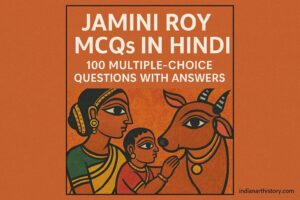
- जामिनी रॉय MCQ in Hindi | 100 बहुविकल्पीय प्रश्न उत्तर सहितजामिनी रॉय MCQ in Hindi — यह संग्रह भारतीय कला इतिहास के सबसे महत्त्वपूर्ण चित्रकारों में से एक, जामिनी रॉय (1887–1972), पर आधारित 100 बहुविकल्पीय प्रश्नों (MCQ) का अनूठा संकलन है। जामिनी रॉय ने बंगाल की कालीघाट लोककला परंपरा को आधुनिक भारतीय कला के केंद्र में लाकर एक नई दिशा दी। उन्होंने अपनी कला में प्राकृतिक रंगों, मोटी रेखाओं और सपाट रूपों का प्रयोग करते हुए ग्रामीण बंगाल के जन-जीवन, देवी-देवताओं और आदिवासी समाज को जीवंत किया। 1954 में भारत सरकार द्वारा पद्म भूषण से सम्मानित जामिनी रॉय को ‘भारत के पिकासो’ के रूप में भी जाना जाता है। उनकी कला आज भी UPSC, UGC-NET, TGT/PGT, State PSC जैसी प्रतियोगी परीक्षाओं में अत्यंत महत्त्वपूर्ण विषय है। इस Jamini Roy MCQ in Hindi श्रृंखला में आपको उनके जीवन, कला शैली, तकनीक, पुरस्कार और विरासत पर आधारित 100 प्रश्न मिलेंगे — प्रत्येक प्रश्न के साथ स्पष्ट उत्तर और एक-पंक्ति की व्याख्या दी गई है ताकि आपकी समझ और गहरी हो।
- राजा रवि वर्मा MCQ in Hindi | 100 प्रश्न उत्तर सहितराजा रवि वर्मा (1848–1906) को ‘आधुनिक भारतीय चित्रकला के पिता’ के रूप में जाना जाता है। उनका जन्म केरल के किलिमानूर में हुआ था और उन्होंने पाश्चात्य तैल चित्रकारी की तकनीक को भारतीय पौराणिक एवं धार्मिक विषयों से जोड़कर एक अनूठी शैली का निर्माण किया। राजा रवि वर्मा MCQ in Hindi उन सभी परीक्षार्थियों के लिए अत्यंत उपयोगी है जो UPSC, State PSC, UGC NET तथा कला इतिहास की परीक्षाओं की तैयारी कर रहे हैं। उनके प्रसिद्ध चित्रों में शकुंतला, दमयंती, सरस्वती, लक्ष्मी तथा पौराणिक देवी-देवताओं की रचनाएँ सम्मिलित हैं जो आज भी भारतीय घरों में पूजनीय हैं। Indian Art History की इस PDF में 100 MCQ प्रश्नों के माध्यम से राजा रवि वर्मा के जीवन, उनकी कला, तकनीक, पुरस्कार और योगदान को सरल हिंदी भाषा में समझाया गया है। अधिक जानकारी और निःशुल्क अध्ययन सामग्री के लिए indianarthistory.com विजिट करें।
- दक्कन चित्रकला MCQ | 100 प्रश्न उत्तर हिंदी मेंदक्कन चित्रकला MCQ हिंदी में — 100 बहुविकल्पीय प्रश्न उत्तर और व्याख्या सहित। UPSC, State … Read more
- मथुरा शैली MCQ in Hindi | 100 प्रश्न उत्तर सहितमथुरा शैली MCQ in Hindi — 100 बहुविकल्पीय प्रश्न उत्तर एवं व्याख्या सहित। UPSC, UGC … Read more
- भीमबेटका MCQ in Hindi | 100 Important Questions with Answersभीमबेटका यूनेस्को विश्व धरोहर स्थल है जो मध्य प्रदेश में स्थित है। इस पोस्ट में भीमबेटका MCQ in Hindi के 100 प्रश्न दिए गए हैं जो भीमबेटका की खोज, शैलचित्रों की विशेषताएँ, पुरातात्विक महत्व और संरक्षण को कवर करते हैं। प्रत्येक प्रश्न के साथ सही उत्तर और व्याख्या भी दी गई है।
- नागर शैली MCQ | 100 बहुविकल्पीय प्रश्न हिंदी में
 नागर शैली MCQ हिंदी में — इस लेख में नागर शैली के 100 महत्वपूर्ण बहुविकल्पीय प्रश्न (A/B/C/D विकल्प और व्याख्या सहित) दिए गए हैं। UPSC, SSC, राज्य PCS और अन्य प्रतियोगी परीक्षाओं की तैयारी के लिए ये नागर शैली के प्रश्न अत्यंत उपयोगी हैं। खजुराहो, कोणार्क, भुवनेश्वर जैसे प्रसिद्ध मंदिरों से जुड़े प्रश्न भी इसमें शामिल हैं।
 - जैन चित्रकला – इतिहास, शैली और विशेषताएं | Indian Art Historyजैन चित्रकला का संपूर्ण परिचय – इतिहास, रंग-विधान, प्रमुख पांडुलिपियाँ, शैली और विशेषताएं। जानें इस … Read more
- बौद्ध कला MCQ | 100 Buddhist Art Questions in Hindiबौद्ध कला MCQ in Hindi — 100 महत्त्वपूर्ण बहुविकल्पीय प्रश्न उत्तर सहित। UPSC, SSC, State … Read more
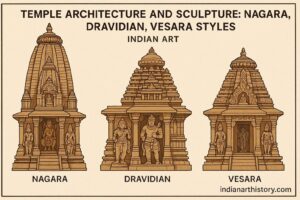
- मंदिर वास्तुकला और मूर्तिकला: नागर, द्रविड़, वेसर शैली | भारतीय कलाभारतीय मंदिर वास्तुकला की तीन प्रमुख शैलियाँ — नागर, द्रविड़ और वेसर — गर्भगृह, शिखर, … Read more
- मधुबनी चित्रकला MCQ — 100 महत्वपूर्ण प्रश्नोत्तरमधुबनी चित्रकला MCQ— TGT/PGT, B.Ed और प्रतियोगी परीक्षाओं के लिए 100 महत्वपूर्ण प्रश्न उत्तर सहित। … Read more
- जैन चित्रकला MCQ – Hindi | 100 प्रश्न व्याख्या सहितजैन चित्रकला MCQ — 100 बहुविकल्पीय प्रश्न व्याख्या सहित। जैन पांडुलिपि कला, अपभ्रंश शैली, तीर्थंकर, … Read more
- चित्रकला क्या है MCQ | 100 प्रश्न उत्तर हिंदी मेंचित्रकला क्या है MCQ हिंदी में – 100 बहुविकल्पीय प्रश्न उत्तर और व्याख्या सहित। मुगल चित्रकला, राजपूत शैली, पहाड़ी शैली, लोक कला और आधुनिक भारतीय चित्रकला पर आधारित ये चित्रकला MCQ प्रश्न UPSC, SSC, RPSC एवं सभी राज्य PSC परीक्षाओं के लिए अत्यंत उपयोगी हैं। प्रत्येक प्रश्न के साथ सही उत्तर और एक-पंक्ति व्याख्या दी गई है। अभी पढ़ें – indianarthistory.com
- आधुनिक भारतीय चित्रकला MCQ | 100 प्रश्न उत्तर सहितआधुनिक भारतीय चित्रकला MCQ के 100 महत्वपूर्ण प्रश्न उत्तर और व्याख्या सहित। UPSC, SSC, NET/JRF … Read more
- वरली कला MCQ | 100 बहुविकल्पीय प्रश्न उत्तर सहितवरली कला Warli Kala – 100 MCQ | बहुविकल्पीय प्रश्न संग्रह ━━━━━━━━━━━━━━━━━━━━━━━━━━━━━━━━━━━━━━━━ वरली कला (Warli … Read more
- कल्पसूत्र MCQ — 100 सबसे महत्वपूर्ण प्रश्न | सम्पूर्ण उत्तर सहितकल्पसूत्र जैन आगम साहित्य का एक प्रमुख छेद सूत्र है जिसमें जैन साधुओं के आचार-नियम, तीर्थंकरों का जीवन चरित्र और जैन संघ की परंपरा का विस्तृत वर्णन है। महावीर स्वामी, ऋषभनाथ, पार्श्वनाथ और नेमिनाथ से संबंधित कल्पसूत्र MCQ प्रश्न परीक्षाओं में सबसे अधिक पूछे जाते हैं। पर्युषण पर्व, पंच महाव्रत, त्रिरत्न, केवलज्ञान, गणधर और समवसरण जैसे जैन दर्शन के महत्वपूर्ण विषयों पर आधारित ये MCQ प्रश्न UGC NET और जैन धर्म की प्रतियोगी परीक्षाओं के लिए अत्यंत उपयोगी हैं।
- मार विजय भित्तिचित्र — अजंता गुफा 1 | TGT PGT नोट्स व MCQमार विजय भित्तिचित्र अजंता की गुफा संख्या 1 में स्थित भारतीय कला का सर्वश्रेष्ठ उदाहरण है। इस चित्र में बुद्ध भूमिस्पर्श मुद्रा में मार (काम, क्रोध और माया के प्रतीक) पर विजय प्राप्त करते हुए दर्शाए गए हैं। TGT, PGT, B.Ed और UGC NET परीक्षाओं के लिए MCQ व नोट्स सहित सम्पूर्ण जानकारी।
- दीक्षा याचना — अजंता भित्ति चित्र | गुफा 17 | TGT PGT नोट्सदीक्षा याचना —अजंता भित्ति चित्र गुफा 17 का सर्वप्रसिद्ध चित्र है। बुद्ध, राहुल, यशोधरा, गुप्तकालीन … Read more
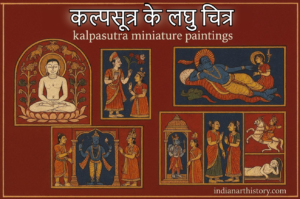
- कल्पसूत्र के लघु चित्र | 10 MCQs व सम्पूर्ण जानकारी | Kalpasutra Miniature Paintingsकल्पसूत्र के लघु चित्रों का सम्पूर्ण इतिहास, शैली, रंग विधान और धार्मिक महत्व जानें। 10 MCQs और 8 FAQs सहित यह लेख परीक्षार्थियों और कला प्रेमियों के लिए अत्यंत उपयोगी है। | Indian Art History
- बंगाल कला शैली MCQ | Top 100 Best प्रश्न | Complete Guideबंगाल कला शैली MCQ: 100 सरल और महत्वपूर्ण बहुविकल्पीय प्रश्न हिंदी में। Bengal School of … Read more
- आधुनिक भारतीय चित्रकला का दूसरा दौरजानिए आधुनिक भारतीय चित्रकला का दूसरा दौर कब और कैसे शुरू हुआ। प्रोग्रेसिव आर्टिस्ट्स ग्रुप, … Read more
- कला क्या है? अर्थ, परिभाषा, प्रकार और षडंग B.Ed, TGT, UGC NET Guideकला क्या है? कला का अर्थ, परिभाषा, प्रकार, षडंग और भारतीय कला की विशेषताएं — … Read more
- मौर्यकालीन कला MCQ – 100 महत्त्वपूर्ण प्रश्नोत्तरमौर्यकालीन कला MCQ – 100 प्रश्नोत्तर | UPSC, PSC हेतुमौर्यकालीन कला पर 100 महत्वपूर्ण MCQ … Read more
- ललित कला MCQ – 100 बहुविकल्पीय प्रश्न (उत्तर सहित)ललित कला MCQ के 100 बहुविकल्पीय प्रश्न उत्तर और व्याख्या सहित। UPSC, TET, State PSC … Read more
- कांगड़ा शैली MCQ – 100 महत्वपूर्ण प्रश्न उत्तर | Kangra Shailiकांगड़ा शैली MCQ के 100 प्रश्न उत्तर A/B/C/D विकल्पों के साथ। UPSC, UGC NET और … Read more
- चित्रकला क्या है? | परिभाषा, प्रकार, षडंग और विशेषताएं | सम्पूर्ण जानकारी 2026चित्रकला क्या है? चित्रकला की परिभाषा, प्रकार, षडंग और प्रमुख विशेषताएं सरल हिंदी में। B.Ed, … Read more
- कला के तत्व (षडंग) MCQ – 100 महत्वपूर्ण प्रश्न उत्तर सहितकला के तत्व (षडंग) MCQ के 100 महत्वपूर्ण प्रश्न उत्तर सहित। UGC NET, UPSC, BFA, … Read more
- राजस्थानी चित्रकला MCQ – 100 महत्त्वपूर्ण प्रश्न (उत्तर सहित)राजस्थानी चित्रकला MCQ के 100 महत्वपूर्ण प्रश्न उत्तर सहित। RPSC, RAS, पटवारी, ग्राम सेवक व … Read more
- मुगल चित्रकला MCQ – 100 महत्वपूर्ण प्रश्नोत्तरमुगल चित्रकला MCQ के 100 महत्वपूर्ण प्रश्न उत्तर सहित पढ़ें। UPSC, SSC और राज्य PSC … Read more
- अजंता की गुफाएं MCQ | 100 Important Questions in Hindiअजंता की गुफाएं MCQ – 100 बहुविकल्पीय प्रश्न उत्तर सहित। UPSC, SSC और State PSC … Read more
- गुप्तकालीन कला MCQ | 100 महत्वपूर्ण प्रश्न | Gupta Period Art MCQ in Hindi | indianarthistory.comगुप्तकालीन कला MCQ | गुप्तकाल (300–600 ई॰) की कला पर आधारित 100 बहुविकल्पीय प्रश्न। मूर्तिकला, … Read more
- सिंधु घाटी सभ्यता MCQ | 100 महत्वपूर्ण प्रश्न उत्तर सहित — अभी पढ़ें | Sindhu Ghati Sabhyata MCQसिंधु घाटी सभ्यता के 100 MCQ प्रश्न हिंदी में। UPSC, SSC, Railway, CTET परीक्षाओं के … Read more
- गांधार शैली MCQ — 100 प्रश्न उत्तर सहित | परीक्षा के लिएगांधार शैली पर 100 बहुविकल्पीय प्रश्न उत्तर सहित। B.Ed, BA और competitive exams के लिए … Read more
- कंदरिया महादेव मंदिर: संपूर्ण जानकारी | Kandariya Mahadev Temple: Complete Guideकंदरिया महादेव मंदिर: भारतीय मंदिर वास्तुकला का अद्वितीय रत्न | Kandariya Mahadev Temple: A Unique … Read more
- खजुराहो पर 100 बहुविकल्पीय प्रश्न | 100 Multiple Choice Questions on KhajurahoKhajuraho MCQ — 100 Multiple Choice Questions on Khajuraho with answers covering temples, history, architecture … Read more
- भारतीय कला के छह अंग (षडंग) – पूर्ण विस्तृत व्याख्या | FAQ + MCQBhartiya Kala Ke 6 Angon Ke Bare Mein Apne Shabdon Mein Vyakhya भारतीय कला के … Read more
- प्राचीन भारतीय कला पर 100 बहुविकल्पीय प्रश्नअजंता की गुफाएं 1. अजंता की गुफाएं किस राज्य में स्थित हैं? सही उत्तर: b) … Read more
- ऐतिहासिक कला पर 100 बहुविकल्पीय प्रश्न100 multiple choice questions on art history प्राचीन भारतीय कला 1. अजंता की गुफाओं में … Read more
- कंदरिया महादेव मंदिर MCQ | 100 बहुविकल्पीय प्रश्नसामान्य जानकारी और इतिहास 1. कंदरिया महादेव मंदिर कहाँ स्थित है? सही उत्तर: b) खजुराहो, … Read more
- Make Money Selling AI Art: $3,400 With Free Tools GuideLearn how I earned $3,400 in 2 years selling AI art on Etsy and stock … Read more
- Kangra Chitrakala MCQs – 100 बहुविकल्पीय प्रश्न हिंदी में उत्तर सहित 2026कांगड़ा चित्रकला ( Kangra Chitrakala MCQs ) के 100 बहुविकल्पीय प्रश्न उत्तर सहित। इतिहास, विशेषताएं, … Read more
- Pal Shaili – पाल चित्रकला: बौद्ध कला की जानकारी 2026पाल चित्रकला (750-1200 ई.) की संपूर्ण जानकारी – नालंदा, विक्रमशिला, बौद्ध पांडुलिपि, ताड़पत्र, धीमान-वीतपाल, विशेषताएं … Read more
- पाल चित्रकला MCQ | 100 बहुविकल्पीय प्रश्न उत्तर सहितपाल चित्रकला MCQ — 100 महत्वपूर्ण बहुविकल्पीय प्रश्न उत्तर सहित। TGT, PGT, UGC NET और … Read more
- कांगड़ा चित्रकला: पहाड़ी शैली की संपूर्ण जानकारी 2026कांगड़ा चित्रकला की संपूर्ण जानकारी – विशेषताएं, इतिहास, विकास, नैनसुख, संसार चंद, राधा-कृष्ण चित्र, गुलेर … Read more
- दृश्य संप्रेषण कला: इतिहास, तत्व, आधुनिक अनुप्रयोग और NET/JRF तैयारीजानें दृश्य संप्रेषण कला क्या है, इसके तत्व, ऐतिहासिक विकास, आधुनिक डिजिटल अनुप्रयोग, और NET/JRF … Read more
- ग्राफ़िक डिज़ाइन क्या है? परिभाषा, इतिहास, तत्व, प्रकार, प्रक्रिया | MCQs & NET/JRF प्रश्नग्राफ़िक डिज़ाइन का विस्तृत अध्ययन — अर्थ, परिभाषा, इतिहास, तत्व, सिद्धांत, प्रकार, टाइपोग्राफी, रंग सिद्धांत, … Read more
- गुप्तकालीन मूर्तिकला : विशेषताएँ, शैलियाँ, उदाहरण, FAQs और MCQs (हिंदी)गुप्तकालीन मूर्तिकला पर विस्तृत हिंदी लेख – विशेषताएँ, मथुरा व सारनाथ शैली, बुद्ध-विष्णु-शिव प्रतिमाएँ, FAQs … Read more
- गुप्तकालीन कला : मूर्तिकला, चित्रकला, वास्तुकला | सम्पूर्ण अध्ययन, MCQs एवं FAQs (हिंदी)गुप्तकालीन कला पर विस्तृत अध्ययन—मूर्तिकला, चित्रकला, वास्तुकला एवं धातु कला का संपूर्ण विश्लेषण। TGT/PGT, UPSC, … Read more
- गुप्तकालीन कला: स्वर्ण युग की संपूर्ण जानकारी 2026गुप्तकालीन कला की संपूर्ण जानकारी हिंदी में। भारतीय कला के स्वर्ण युग (320-550 ई.) की … Read more
- ६. वर्णिका भंग (रंगों का मिश्रण और प्रयोग)Color blending (mixing and using colors) परिभाषा और सार वर्णिका भंग संस्कृत के ‘वर्णिका’ (रंग) और … Read more
- ५. सादृश्य (समानता और यथार्थता)परिभाषा और सार सादृश्य संस्कृत के ‘स’ (साथ) और ‘दृश्य’ (दिखाई देना) से बना है, जिसका … Read more
- ४. लावण्य योजना (सौंदर्य और अनुग्रह)परिभाषा और सार लावण्य योजना चित्रकला का वह दिव्य और सूक्ष्म तत्व है जो चित्र में … Read more
- ३. भाव (भावनाओं की अभिव्यक्ति)परिभाषा और महत्व भाव चित्रकला का सबसे महत्वपूर्ण, प्राणवान और हृदयस्पर्शी तत्व है। संस्कृत में ‘भाव’ … Read more
- २. प्रमाण (माप और अनुपात)परिभाषा और मूल सिद्धांत प्रमाण शब्द संस्कृत की ‘प्र’ (उत्तम) और ‘माण’ (माप) से बना है, … Read more
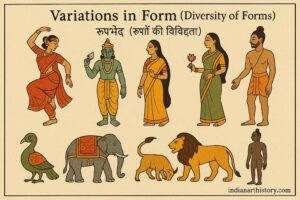
- भारतीय चित्रकला के अंग (रूपभेद)रूपभेद (रूपों की विविधता) Morphological variation (diversity of forms) परिभाषा और मूल अवधारणा रूपभेद चित्रकला का … Read more
- भारतीय चित्रकला के षड्अंग (छह अंग)The six limbs (or principles) of Indian painting भारतीय चित्रकला की परंपरा अत्यंत प्राचीन और … Read more
- कला / चित्रकला की प्रमुख विशेषताएँ : 100 MCQs (हिंदी)Key Features of Art/Painting: 100 MCQs (Hindi) नीचे कला / चित्रकला की प्रमुख विशेषताओं पर आधारित 100 वस्तुनिष्ठ … Read more
- Topic-wise MCQs (रेखा, रंग, सौंदर्य, भाव)Topic-wise MCQs (Lines, Colors, Beauty, Emotions) Topic–1 : रेखा (Line) — 25 MCQs 1. चित्रकला … Read more
- कला / चित्रकला की प्रमुख विशेषताएँ : MCQs (हिंदी)Key features of art/painting: MCQs (Hindi) 1. कला का मूल तत्व क्या है? A) अनुकरणB) … Read more
- the field of art | कला का क्षेत्रकला मानव सभ्यता की सबसे प्राचीन और महत्वपूर्ण अभिव्यक्तियों में से एक है। यह न … Read more
- कला के प्रमुख तत्व: सौंदर्य, अभिव्यक्ति, सृजनात्मकता और कल्पनाelements of art are: beauty, expression, creativity, and imagination. प्रस्तावना कला मानव सभ्यता की सबसे … Read more
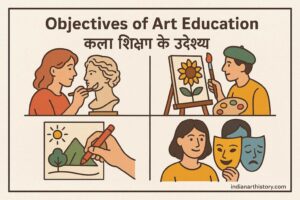
- कला शिक्षण के उद्देश्यप्रस्तावना कला शिक्षण मानव विकास का एक महत्वपूर्ण अंग है जो व्यक्ति के सर्वांगीण विकास … Read more
- कला का अर्थ: B.Ed. के लिए विस्तृत अध्ययन सामग्रीThe meaning of art: Detailed study material for B.Ed. प्रस्तावना कला मानव सभ्यता का अभिन्न … Read more
- कला का शाब्दिक और व्यापक अर्थकला का शाब्दिक अर्थ (Literal Meaning) व्युत्पत्ति (Etymology) ‘कला’ शब्द संस्कृत की ‘कला’ धातु से … Read more
- दृश्य कला: एक विस्तृत अध्ययनचित्रकला, मूर्तिकला, वास्तुकला और फोटोग्राफी प्रस्तावना दृश्य कला मानव सभ्यता की सबसे प्राचीन और महत्वपूर्ण … Read more
- Types of Art: A Complete Guide कला के प्रकार: एक संपूर्ण मार्गदर्शिकाप्रस्तावना कला मानव सभ्यता की आत्मा है। यह वह माध्यम है जिसके द्वारा मनुष्य अपनी … Read more
- भारतीय जल रंग चित्रकार: व्यापक परिचयजल रंग चित्रकला: कला का नाजुक माध्यम जल रंग चित्रकला को कला की सबसे चुनौतीपूर्ण … Read more
- कला क्या है? (B.Ed. परिप्रेक्ष्य)कला मानवता की सबसे मौलिक अभिव्यक्ति के रूपों में से एक है, फिर भी इसे … Read more
- कला का अर्थ (Kala ka Arth) — एक विस्तृत एवं समग्र अध्ययननीचे लगभग 1000 शब्दों में “कला का अर्थ” विषय पर एक समग्र, परीक्षा-उपयोगी, वर्णनात्मक लेख … Read more
- कला का अर्थ (Kala ka Arth) — एक समग्र एवं विस्तृत लेखभूमिका कला मानव सभ्यता की आत्मा है। जब मनुष्य ने बोलना, सोचना और महसूस करना … Read more
- सर जे.जे. स्कूल ऑफ़ आर्ट, मुंबई: आधुनिक भारतीय कला का उद्गम स्थल।परिचय सर जामसेटजी जीजीभॉय स्कूल ऑफ आर्ट (Sir J.J. School of Art), जिसे सामान्यतः जे.जे. … Read more
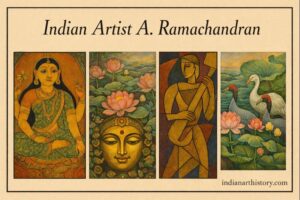
- ए. रामचंद्रन: भारतीय समकालीन कला के महान चित्रकारप्रारंभिक जीवन और शिक्षा अचुतन रामचंद्रन नायर, जिन्हें ए. रामचंद्रन के नाम से जाना जाता … Read more
- अफ्रीकी और अफ्रीकी-अमेरिकी कला: एक व्यापक अध्ययनपरिचय अफ्रीकी और अफ्रीकी-अमेरिकी कला विश्व की सबसे प्रभावशाली और समृद्ध कला परंपराओं में से … Read more
- सजावटी कला: एक विस्तृत अध्ययनपरिचय सजावटी कला (Decorative Arts) उन कला रूपों को संदर्भित करती है जो सौंदर्यात्मक और … Read more
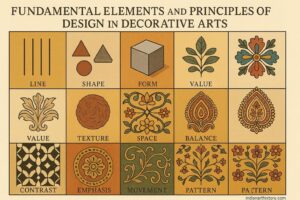
- सजावटी कला में डिजाइन के मूलभूत तत्व और सिद्धांतFundamental Elements and Principles of Design in Decorative Arts परिचय डिजाइन के मूलभूत तत्व और … Read more
- अब्दुर रहमान चुगताई: एक व्यापक अध्ययनप्रस्तावना अब्दुर रहमान चुगताई (1897-1975) बीसवीं शताब्दी के सबसे महत्वपूर्ण और विशिष्ट दक्षिण एशियाई कलाकारों … Read more
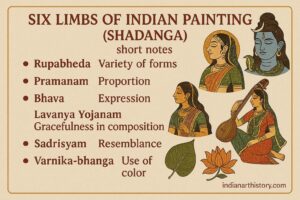
- Six Limbs of Indian Painting (Shadanga)Short Notes / Revision Notes 📌 Meaning Shadanga = Six Limbs of PaintingThese are the … Read more
- Modern art quizModern Art Quiz NEXT let currentQuestion = 0; const quizContainer = document.getElementById(“quiz”); const nextBtn = … Read more
- Art quizFamous Paintings and Artists Quiz NEXT let currentQuestion = 0; const quizContainer = document.getElementById(“quiz”); const … Read more
- Modern Art QuizModern Art Quiz NEXT let currentQuestion = 0; const quizContainer = document.getElementById(“quiz”); const nextBtn = … Read more
- SCULPTURE — 100 MCQs (WITH ANSWERS)1. The “Pietà” is sculpted by: A) DonatelloB) MichelangeloC) BerniniD) GhibertiAnswer: B 2. The material … Read more
- Ajanta Art QuizAjanta Art Quiz Restart Quiz let currentQuestion = 0; let score = 0; const quizContainer … Read more
- Mughal Art QuizMughal Art Quiz Restart Quiz let currentQuestion = 0; let score = 0; const quizContainer … Read more