Partition की त्रासदी:1947 के Partition ने लाखों ज़िंदगियां तोड़ीं — MF Husain, Tyeb Mehta, Amrita Sher-Gil जैसे कलाकारों ने इस दर्द को canvas पर उतारा। जानिए Partition भारत कला त्रासदी की पूरी कहानी।
Table of Contents
परिचय: 1947 — एक Line ने सब बदल दिया
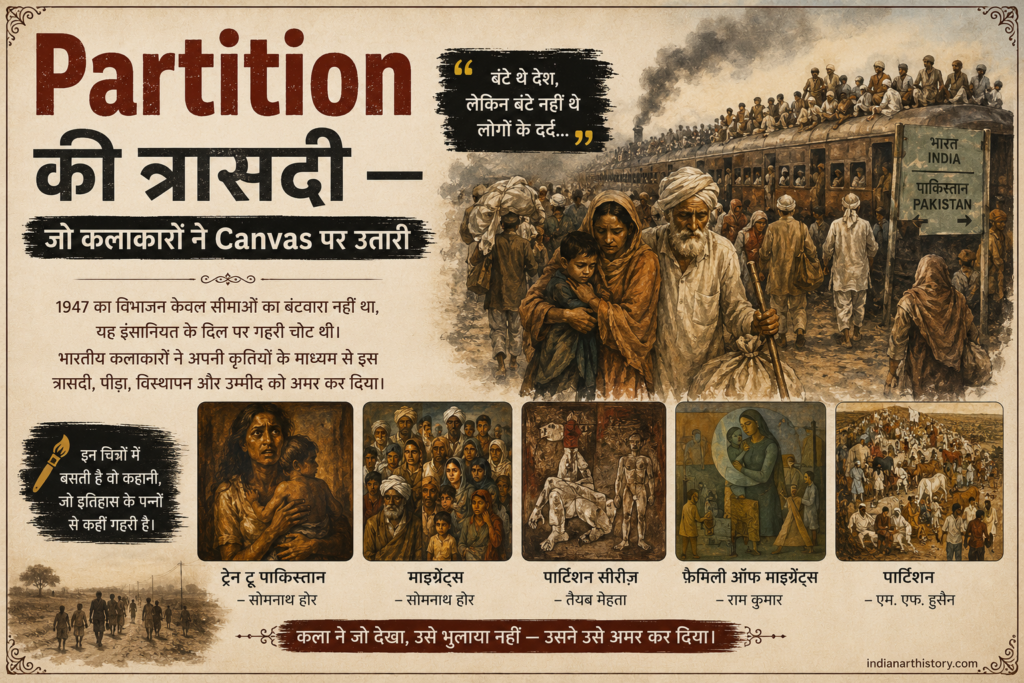
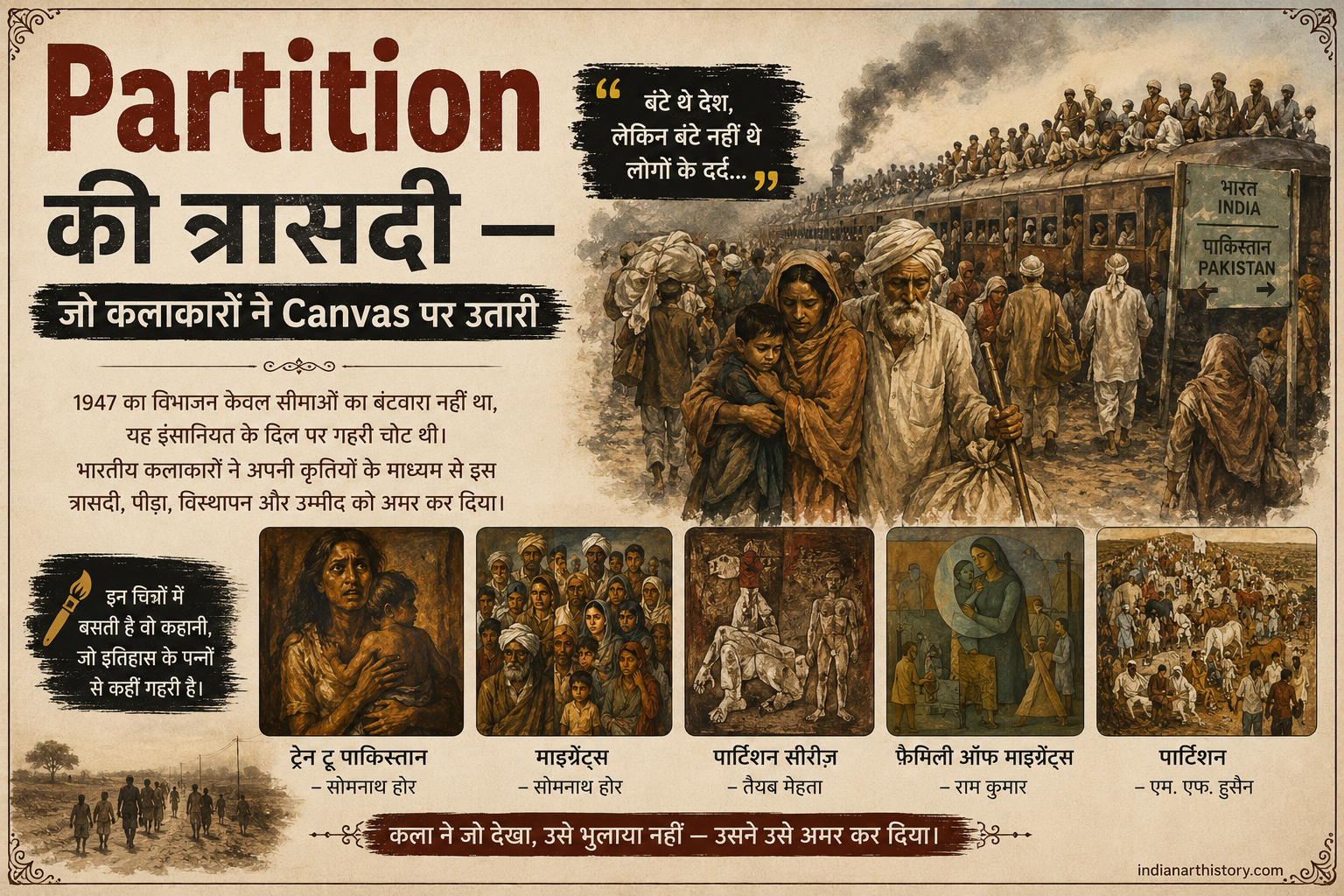
14 और 15 अगस्त 1947 की वो रात — जब घड़ी की सुइयां midnight पर पहुंचीं — तो दो देश जन्मे। लेकिन उसी रात लाखों लोगों की ज़िंदगियां भी टूट गईं। Partition of India सिर्फ एक राजनीतिक घटना नहीं थी — यह एक ऐसी मानवीय त्रासदी थी जिसने पूरे subcontinent को हिला कर रख दिया।
Cyril Radcliffe ने एक नक्शे पर जो line खींची, उसने सिर्फ जमीनें नहीं बांटी — उसने परिवार बांटे, रिश्ते बांटे, यादें बांटीं और आत्माएं बांटीं। लगभग 1 से 2 करोड़ लोग अपने घर छोड़कर दूसरी तरफ जाने को मजबूर हुए। 10 से 20 लाख लोग मारे गए। हजारों औरतों के साथ अत्याचार हुए। यह सब इतनी तेज़ी से हुआ कि लोग समझ भी नहीं पाए कि क्या हो रहा है।
इस दर्द को शब्दों में बयान करना मुश्किल था। लेकिन कुछ लोग थे जिन्होंने इसे canvas पर, रंगों में, brushstrokes में उतारा। भारतीय कलाकारों ने Partition की इस त्रासदी को अपने-अपने तरीके से अभिव्यक्त किया — कभी सीधे, कभी metaphor के जरिए, कभी आंसुओं की तरह बहते रंगों में।
यह article उन्हीं कलाकारों की कहानी है — जिन्होंने Partition को न सिर्फ महसूस किया बल्कि उसे अपनी कला का हिस्सा बना दिया। यह सिर्फ art history नहीं है — यह उस दर्द का documentation है जिसे हर भारतीय और पाकिस्तानी को जानना चाहिए।
Artists जो Partition से directly affected थे
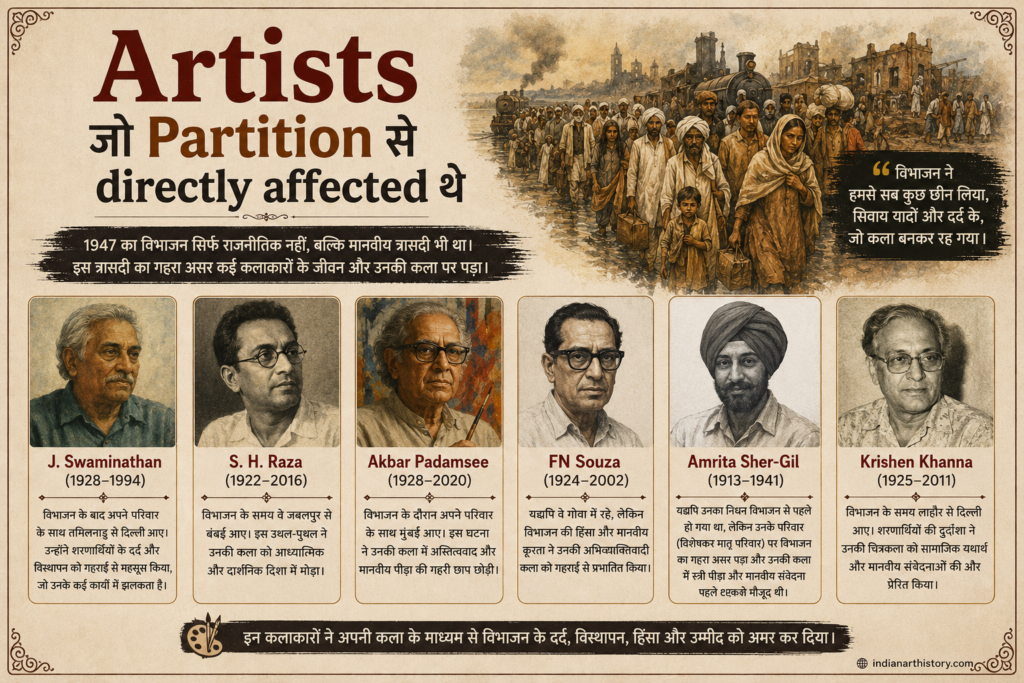
Partition एक abstract idea नहीं था उन कलाकारों के लिए जो उस दौर में जी रहे थे। उनके लिए यह उनके घर का, उनके शहर का, उनके प्रियजनों का सवाल था।
Progressive Artists’ Group — जो 1947 में Mumbai में बना — इसके कई founding members directly Partition से प्रभावित थे। इस group में MF Husain, SH Raza, FN Souza, KH Ara, HA Gade और Tyeb Mehta जैसे नाम थे। इनमें से कई ने Partition को अपनी आंखों से देखा था, महसूस किया था।
Lahore का खोना: Lahore — जो भारतीय कला और संस्कृति का एक बड़ा केंद्र था — Pakistan को चला गया। वहां के कलाकार, writers, intellectuals — सब बिखर गए। Lahore की Mayo School of Art (जो अब NCA यानी National College of Arts है) — इसके कई छात्र और teachers को अचानक decide करना पड़ा कि वो किस तरफ जाएंगे।
Delhi और Lahore के बीच फंसे लोग: कई कलाकार ऐसे थे जो Partition से पहले दोनों शहरों में काम करते थे। उनके लिए यह line सिर्फ geographic नहीं थी — यह उनकी artistic identity को भी बांट रही थी।
Amrita Sher-Gil की असमय मृत्यु: Amrita Lahore में थीं। वो Partition से पहले ही गुज़र गईं — लेकिन उनकी legacy और उनकी paintings का क्या हुआ, यह एक अलग दर्दनाक कहानी है।
Maqbool Fida Husain का सफर: MF Husain ने Partition को Pandharpur से Mumbai के सफर में देखा। वो हिंदुस्तान में रहे, लेकिन उनके दिल पर Partition की छाया हमेशा रही।
Tyeb Mehta का Bombay: Tyeb Mehta Bombay में थे — लेकिन उनके आसपास जो Partition refugees आए, उनका दर्द उनकी paintings में उतरा।
इन सभी कलाकारों ने एक ऐसे India में जीना शुरू किया जो बदल चुका था — और उस बदलाव को उन्होंने अपने canvas पर immortal कर दिया।
Amrita Sher-Gil: Lahore में मौत — Partition से पहले
Amrita Sher-Gil — भारत की सबसे enigmatic और talented painters में से एक। उनकी कहानी Partition की त्रासदी से थोड़ी अलग है — लेकिन उनका Lahore से connection और उनकी असमय मौत इस पूरी narrative का एक अहम हिस्सा है।
कौन थीं Amrita Sher-Gil?
Amrita का जन्म 1913 में Budapest, Hungary में हुआ था। उनके पिता Umrao Singh Sher-Gil एक Punjabi Sikh aristocrat थे और माँ Marie Antoinette Gottesmann एक Hungarian opera singer थीं। इस multicultural background ने Amrita को एक unique artistic sensibility दी।
उन्होंने Paris में École des Beaux-Arts में पढ़ाई की और वहां उनकी paintings ने काफी recognition पाई। लेकिन 1934 में वो India वापस आईं — और यहां उन्होंने वो काम किया जिसने उन्हें भारतीय कला की icon बना दिया।
Amrita की paintings और उनका दर्द:
Amrita की paintings में एक गहरी melancholy थी। “Three Girls,” “Young Girls,” “Bride’s Toilet,” “Brahmacharis” — इन सभी paintings में एक ऐसी sadness है जो देखने वाले को अंदर तक छू जाती है।
उन्होंने Indian women को जिस तरह paint किया — उनकी आंखों में जो emptiness है, उनके चेहरों पर जो थकान है — वो भारतीय समाज की हकीकत थी। एक ऐसी हकीकत जिसे उस दौर में कोई openly दिखाने की हिम्मत नहीं करता था।
Lahore का connection:
1941 में Amrita अपने पति Victor Egan के साथ Lahore चली गईं। Lahore उस वक्त cultural activities का एक बड़ा center था। Mayo School of Arts जैसी institutions थीं, intellectuals का एक vibrant circle था।
Lahore में Amrita ने नई paintings शुरू कीं। उनका plan था कि वो एक बड़ी solo exhibition करेंगी।
28 दिसंबर 1941:
लेकिन वो exhibition कभी नहीं हुई। 28 दिसंबर 1941 को — अपनी exhibition के कुछ ही दिन पहले — Amrita Sher-Gil का निधन हो गया। वो सिर्फ 28 साल की थीं। मौत का कारण आज भी पूरी तरह clear नहीं है।
Partition और Amrita की legacy:
Amrita Partition से पहले गुज़र गईं — लेकिन Partition ने उनकी legacy को affect किया। उनकी कई paintings Lahore में थीं। जब Partition हुआ, तो यह सवाल उठा कि उनकी art किसकी है — India की या Pakistan की?
आज Amrita को भारत की Frida Kahlo कहा जाता है। उनकी paintings National Gallery of Modern Art, New Delhi में हैं। लेकिन Lahore में जो उनकी memories थीं, जो उनका creative space था — वो हमेशा के लिए एक line के उस तरफ चला गया।
Amrita की कहानी यह बताती है कि Partition सिर्फ physical नहीं था — यह cultural और artistic heritage का भी बंटवारा था।
MF हुसैन: Partition का trauma — paintings में
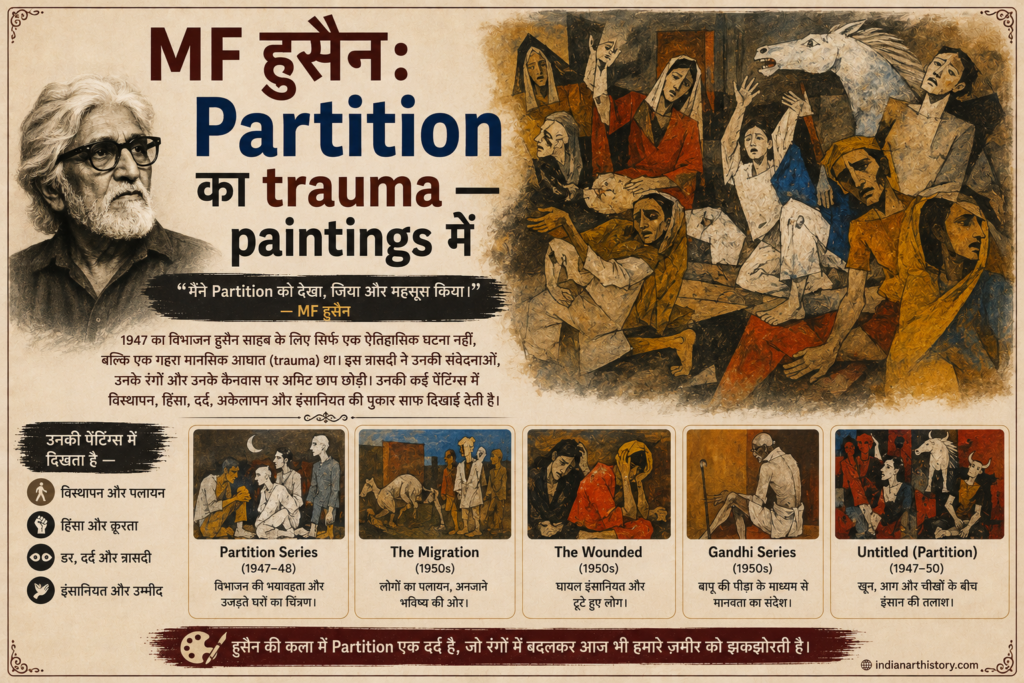
Maqbool Fida Husain — भारत के सबसे famous और controversial painters। उन्हें “Picasso of India” कहा जाता है। लेकिन उनके canvas पर Partition का दर्द किस तरह उतरा — यह कम लोग जानते हैं।
Husain और Partition:
1947 में Husain 31-32 साल के थे। वो Pandharpur (Maharashtra) से Bombay आ चुके थे और एक struggling artist के तौर पर काम कर रहे थे। Partition के दौरान Bombay में refugees की भीड़ आई — Punjab से, Sindh से, NWFP से। उनकी आंखों में जो दर्द था, उनके बदन पर जो थकान थी — Husain ने यह सब देखा।
“Between the Spider and the Lamp” — 1956:
Husain की यह painting Partition के dislocation और uncertainty को represent करती है। यह उनकी early major works में से एक है जहां उन्होंने human figures को एक ऐसी space में दिखाया जो न यहां की है न वहां की।
Partition series और human displacement:
Husain की paintings में repeatedly ऐसे figures आते हैं जो movement में हैं — कहीं जा रहे हैं, कहीं से आ रहे हैं। यह Partition के refugees की universal imagery थी। Mass migration — जब लाखों लोग सड़कों पर थे, trains में थे, पैदल चल रहे थे — इस movement को Husain ने अपने brushstrokes में capture किया।
Horses — एक symbol:
Husain के famous horses — जो उनकी paintings का signature बन गए — कई art critics इन्हें Partition की energy और chaos से जोड़ते हैं। Wild, uncontrolled, powerful — ये horses उस storm को represent करते हैं जो 1947 में आया था।
महाभारत series और Partition:
1970s-80s में Husain ने Mahabharata पर एक बड़ी series बनाई। इस series में war, displacement और human suffering के जो themes हैं — वो directly Partition के trauma से connected हैं। Husain के लिए Mahabharata एक ancient text नहीं था — यह एक living reality थी जो उन्होंने 1947 में देखी थी।
“The Lonely Bull” और self-exile:
Husain की life में भी एक Partition आई — जब 2000s में Hindu nationalist groups ने उनकी paintings को लेकर controversy खड़ी की और उन्हें India छोड़ना पड़ा। वो Qatar के citizen बन गए और 2011 में London में उनका निधन हुआ।
यह irony कम दर्दनाक नहीं है — एक ऐसा artist जिसने Partition के दर्द को paint किया, उसे खुद अपनी homeland से एक तरह का exile झेलना पड़ा।
Husain की legacy:
MF Husain की paintings आज करोड़ों में बिकती हैं। लेकिन उनकी असली legacy यह है कि उन्होंने Indian art को एक ऐसी language दी जो political और social reality से disconnect नहीं थी। Partition उस reality का सबसे बड़ा हिस्सा था।
Tyeb Mehta: Falling Figures और Partition
Tyeb Mehta — भारत के उन कलाकारों में से एक जिनकी paintings को देखकर दिल भारी हो जाता है। उनके “Falling Figure” — यह एक ऐसी image है जो एक बार देखने के बाद दिमाग से नहीं जाती।
Tyeb का बचपन और Partition:
Tyeb Mehta का जन्म 1925 में Kapadvanj, Gujarat में हुआ था। वो एक Muslim family से थे। 1947 में वो 22 साल के थे और Bombay में J.J. School of Art में पढ़ रहे थे।
Partition के दौरान Bombay में जो communal violence हुई, जो tension थी — उसे Tyeb ने directly experience किया। उनके कई दोस्त Pakistan चले गए। जो रिश्ते थे वो टूट गए।
Falling Figure — एक painting, एक metaphor:
Tyeb Mehta की सबसे iconic painting series “Falling Figure” है। इसमें एक human figure को falling या tumbling position में दिखाया गया है। यह figure कहीं गिर रहा है — और यह पता नहीं कि वो कहां land करेगा।
यह Partition के displaced लोगों का perfect visual metaphor है। जो लोग Partition में अपना घर छोड़कर गए — वो भी एक ऐसी ही falling state में थे। न उनके पास past था, न future clear था। वो बस fall कर रहे थे।
Diagonal और violence:
Tyeb की paintings में एक strong diagonal line होती है जो composition को cut करती है। कई critics इसे Radcliffe Line का visual representation मानते हैं — वो line जिसने India को Pakistan से बांटा।
यह diagonal एक violence है — यह space को, figures को, relationships को cut करती है। ठीक वैसे जैसे Partition ने सब कुछ cut कर दिया था।
“Celebration” — 1974:
Tyeb की painting “Celebration” में एक contradiction है। नाम “Celebration” है — लेकिन painting में जो है वो celebratory नहीं है। एक falling figure, dark colors, a sense of doom। यह उस “celebration” की critique है जो 1947 में Independence के नाम पर हुई — जबकि साथ-साथ Partition का कत्लेआम भी हो रहा था।
London में self-exile:
Tyeb 1959 में London चले गए — एक तरह का voluntary exile। वो कुछ साल बाद वापस आए — लेकिन उनके London के अनुभव ने उनकी paintings को और depth दी। एक immigrant की तरह जीना — यह भी एक तरह का Partition है।
Tyeb Mehta की auction records:
2002 में Tyeb की painting “Mahishasura” ₹1.5 crore में बिकी — जो उस वक्त किसी living Indian artist की सबसे महंगी painting थी। उनका काम आज भी Indian contemporary art का सबसे important हिस्सा माना जाता है।
लेकिन उनकी paintings की असली कीमत money में नहीं है — वो उस दर्द में है जो उन्होंने canvas पर उतारा।
Literature + Art: Manto की कहानियां और Visual Art
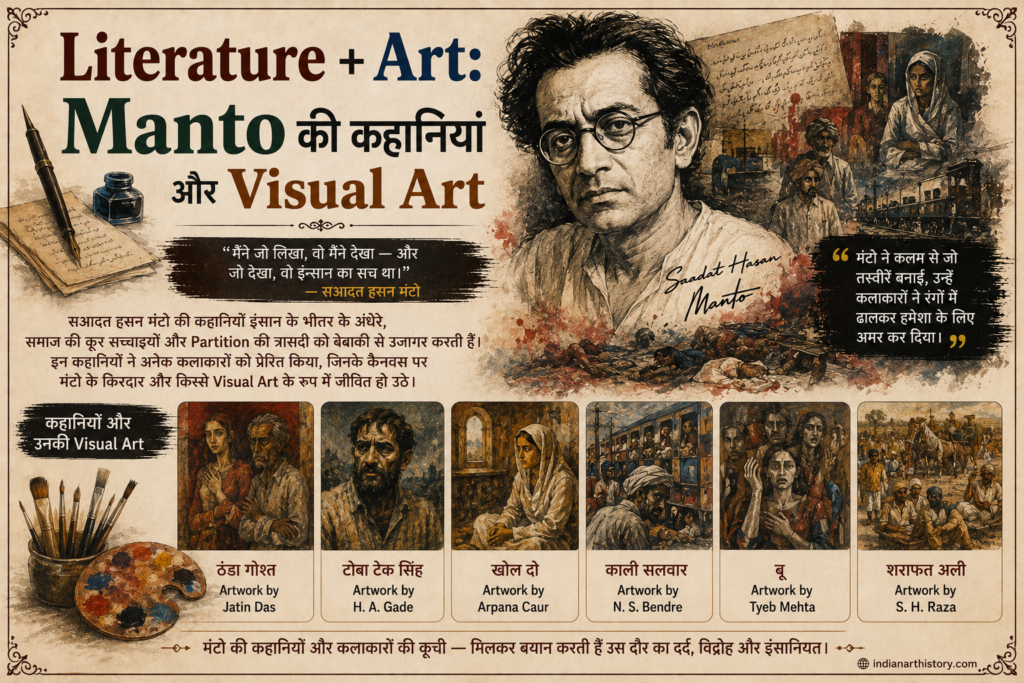
Saadat Hasan Manto और Visual Artists — दोनों ने Partition को अलग-अलग medium में express किया। लेकिन दोनों की भाषा एक थी — वो भाषा जो दर्द बोलती है।
Manto कौन थे?
Saadat Hasan Manto — Urdu literature के सबसे bold और controversial writers। वो Ludhiana में पैदा हुए थे, Bombay में film industry से जुड़े थे — और Partition के बाद Pakistan चले गए। वो अपनी पूरी ज़िंदगी इस decision के साथ struggle करते रहे।
Lahore में 1955 में उनका निधन हुआ — सिर्फ 42 साल की उम्र में। शराब, अकेलापन, और Partition का दर्द — इन सबने मिलकर उन्हें तोड़ दिया।
“Toba Tek Singh” — एक visual metaphor:
Manto की कहानी “Toba Tek Singh” Partition की सबसे powerful literary response है। इसमें एक insane asylum के patients decide करते हैं कि वो किस देश में जाएंगे।
इस कहानी को अगर visually represent करें — तो यह Abstract Expressionism की एक painting होगी। Confusion, chaos, boundaries जो make no sense — यही Manto का और यही उस दौर के visual artists का theme था।
“Khol Do” — horror जो canvas पर उतरा:
Manto की “Khol Do” — शायद Partition की सबसे disturbing कहानी। इसमें जो violence है, जो horror है — उसे painters ने भी अपने-अपने तरीके से paint किया।
Tyeb Mehta, Krishen Khanna, और बाद में contemporary artists जैसे Nalini Malani ने इस तरह के narratives को visual art में translate किया।
Krishen Khanna और Partition:
Krishen Khanna — एक और artist जिन्होंने Partition को directly experience किया। वो Lahore में थे और Partition के दौरान उनका परिवार India आया। उनकी paintings में trains का बार-बार आना — यह कोई coincidence नहीं है।
Partition के दौरान trains मौत की carrier बन गई थीं — एक तरफ से Hindu और Sikh जाते थे, दूसरी तरफ से Muslims। Khanna के लिए train एक symbol बन गई — displacement का, violence का, और उस journey का जो कभी भी comfortable नहीं थी।
उनकी painting “Wagah” — directly Partition border को depict करती है। यह भारत-पाकिस्तान border पर होने वाली flag ceremony को एक ऐसी complexity के साथ दिखाती है जो सिर्फ patriotism नहीं है — उसमें grief भी है।
Literature और Art का convergence:
Manto, Ismat Chughtai, Rajinder Singh Bedi — इन writers ने Partition को words में उतारा। और Husain, Tyeb, Khanna — इन्होंने colors में। दोनों का message एक था:
Partition सिर्फ एक political event नहीं था — यह एक human catastrophe थी जिसे history की किताबों में जितनी जगह मिलती है, उससे कहीं ज़्यादा जगह की वो deserve करती है।
Contemporary Partition Art: नई पीढ़ी की नज़र
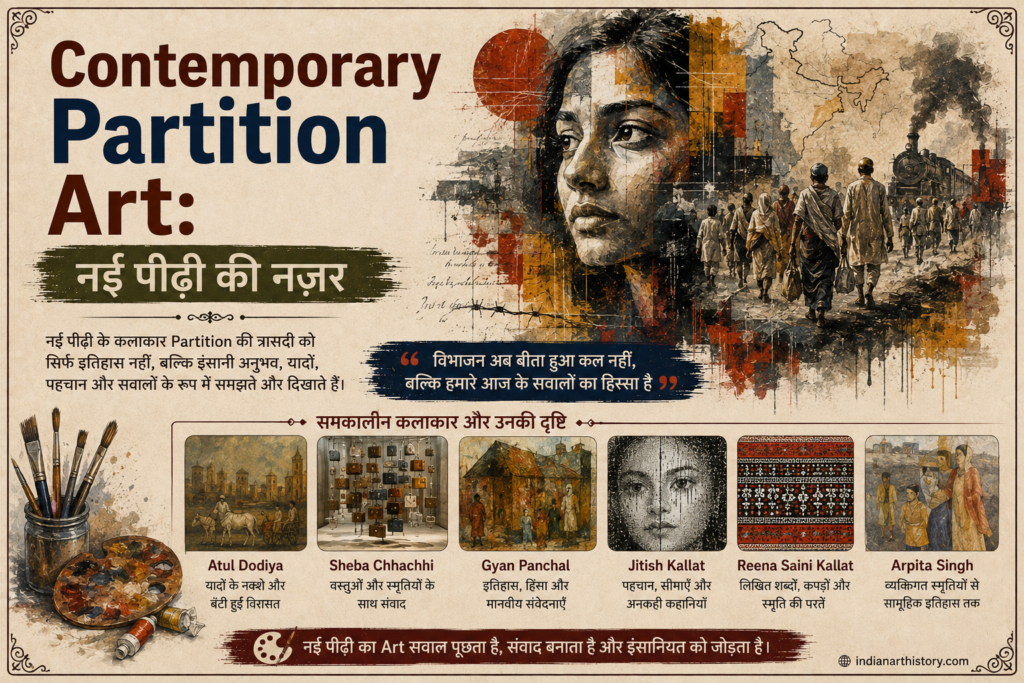
Partition 1947 में हुआ था — लेकिन उसकी echo आज भी भारतीय कला में सुनाई देती है। नई पीढ़ी के artists जिन्होंने Partition को personally नहीं देखा — वो भी इस theme पर काम कर रहे हैं।
Nalini Malani — Video Art और Partition:
Nalini Malani — India की सबसे important contemporary artists में से एक। वो Karachi में पैदा हुई थीं और Partition के बाद उनका परिवार India आया।
Nalini ने Partition को एक नए medium में express किया — video installation। उनका काम “In Search of Vanished Blood” — यह Manto की कहानियों पर based है। इसमें women की experiences को center में रखा गया है — वो women जो Partition में सबसे ज़्यादा suffer कीं।
Nalini का काम feminist art और Partition narrative को combine करता है — एक ऐसा combination जो बहुत ज़रूरी है।
Vivan Sundaram — Memory और Archive:
Vivan Sundaram — जो Amrita Sher-Gil के grand-nephew हैं — उन्होंने Partition को एक अलग angle से देखा। उन्होंने family archives को, old photographs को art में transform किया।
उनका installation work यह show करता है कि Partition की memory कैसे generations में pass होती है। यह memory फीकी नहीं पड़ती — यह बस नई forms लेती रहती है।
Anita Dube — Body और Violence:
Anita Dube की art में body, violence और memory के themes हैं। Partition में जो violence हुई — especially women के साथ — उसे Dube ने अपने काम में address किया है।
उनका काम uncomfortable है — लेकिन वो discomfort ज़रूरी है। हम Partition की “sanitized” history नहीं दे सकते।
Rummana Hussain:
Rummana Hussain — एक Muslim artist जो India में रहीं — उन्होंने identity, belonging और displacement के themes पर काम किया। उनका installation “Home/Nation” — यह directly उस question को address करता है जो Partition ने हर Indian Muslim के सामने खड़ा किया: क्या यह देश मेरा है?
Photography और Partition:
Contemporary photographers ने भी Partition को document किया है। Punjab के villages में आज भी ऐसे बुज़ुर्ग हैं जो Partition के witness थे। उनकी photographs, उनकी stories — यह visual documentation एक ज़रूरी archive है।
Digital Art और Partition:
आज के young artists digital medium में Partition को explore कर रहे हैं। Social media पर Partition की stories share हो रही हैं। Interactive installations हैं जहां लोग अपनी family की Partition stories contribute कर सकते हैं।
1947 Partition Archive जैसे projects — जो oral histories collect कर रहे हैं — ये भी एक तरह का art है। Memory का preservation।
Pakistan में वो Artists जो India में Famous थे
Partition ने एक ऐसा divide create किया जहां कुछ artists Pakistan में रहे और India में उनका नाम कम होता गया — जबकि वो equally talented थे।
Sadequain:
Sadequain — Pakistan के सबसे great painters में से एक। वो Amroha (UP) में पैदा हुए थे — यानी वो भारतीय मूल के थे जो Partition के बाद Pakistan गए।
उनकी calligraphy और painting का combination अद्भुत था। Lahore Museum में उनके murals हैं जो breathtaking हैं। लेकिन India में उनका नाम बहुत कम लोग जानते हैं।
Sadequain ने Partition के बाद Karachi और Lahore में काम किया। उनकी paintings में existential angst है, Sufi philosophy है — और एक ऐसी universal humanity है जो borders नहीं मानती।
Allah Bux:
Allah Bux — एक और Pakistani artist जो India में virtually unknown हैं। वो Realism के master थे। उनकी paintings में Punjab की daily life थी — वो Punjab जो Partition के बाद दो टुकड़ों में बंट गया।
Chughtai:
M.A. Rahman Chughtai — Lahore के artist जिन्हें “Mussavar-ul-Mulk” (Country’s Painter) कहा जाता था। वो Partition से पहले से ही famous थे और Partition के बाद Pakistan में रहे।
उनका काम Mughal miniature tradition और modern sensibility का combination था। India में उनकी paintings देखने को नहीं मिलतीं — जो एक बड़ी artistic loss है।
Zubeida Agha:
Zubeida Agha — Pakistan की first abstract artist। वो Faisalabad में पैदा हुई थीं। उनका काम Abstract Expressionism और Islamic aesthetics का एक unique blend था।
वो यूरोप और अमेरिका में भी famous हुईं — लेकिन India में उनका नाम शायद ही किसी को पता हो।
Ismail Gulgee:
Ismail Gulgee — एक Pakistani artist जिनकी paintings में calligraphy, abstraction और spirituality थी। उनका काम internationally recognized था।
वो originally Peshawar के थे — और उनकी art में वो North-West frontier की spirituality थी जो अब एक अलग देश में है।
इन कलाकारों को क्यों जानना ज़रूरी है?
यह artists हमें याद दिलाते हैं कि Partition ने सिर्फ political divide नहीं किया — उसने एक shared cultural legacy को भी बांट दिया।
भारत और पाकिस्तान की art traditions एक ही root से आती हैं — Mughal paintings, Pahari miniatures, Punjab की folk art — यह सब shared heritage है। Partition ने हमें एक-दूसरे की art से दूर कर दिया।
आज जब कोई India-Pakistan के बीच cultural exchange की बात करता है — art उसका सबसे powerful medium हो सकती है।
FAQs
Q1. Partition of India ने art को किस तरह affect किया?
Partition ने Indian art को fundamentally change किया। पहले — जो artists carefree, mythological या landscape-based work कर रहे थे — उनमें से कई ने Partition के बाद human suffering, displacement और identity जैसे themes को adopt किया। Progressive Artists’ Group का formation भी इसी context में हुआ — यह artists एक new artistic language ढूंढ रहे थे जो post-Partition India की reality को express कर सके।
Q2. Progressive Artists’ Group क्या था और Partition से इसका क्या संबंध था?
Progressive Artists’ Group की स्थापना 1947 में Mumbai में FN Souza ने की थी। इसमें MF Husain, SH Raza, KH Ara, HA Gade और Tyeb Mehta शामिल थे। यह group इस विचार से बना था कि Indian art को European academicism और British colonial influence से आज़ाद होना चाहिए। Partition की background में यह एक cultural independence की declaration भी थी। इन artists ने modernism को Indian reality से जोड़ा।
Q3. Amrita Sher-Gil का Partition से क्या connection था?
Amrita Sher-Gil Partition से पहले 1941 में Lahore में निधन हो गई थीं — लेकिन उनका Lahore से गहरा connection था। Lahore उनका last home था और वहीं उनकी कुछ important paintings थीं। Partition के बाद उनकी legacy का एक हिस्सा Pakistan में रह गया — यह भी एक तरह का cultural Partition था।
Q4. Tyeb Mehta के “Falling Figure” का Partition से क्या संबंध है?
Tyeb Mehta के Falling Figures को कई art historians Partition के displaced लोगों के visual metaphor के रूप में देखते हैं। वो figure जो न कहीं की है न कहीं की — बस fall कर रही है — यह exactly उस experience को represent करती है जो millions of Partition refugees ने महसूस किया।
Q5. Pakistan के किन artists को India में जानना चाहिए?
Sadequain, Allah Bux, MA Rahman Chughtai, Zubeida Agha, और Ismail Gulgee — ये सब Pakistani artists हैं जिनका काम internationally recognized है लेकिन India में virtually unknown हैं। इनके काम को जानना दोनों देशों की shared artistic legacy को समझने में मदद करता है।
Q6. Contemporary artists Partition को किस तरह explore कर रहे हैं?
Nalini Malani video installations के through, Vivan Sundaram archives के through, और कई young artists digital medium के through Partition को explore कर रहे हैं। यह काम Partition को सिर्फ history नहीं बल्कि एक living memory के रूप में present करता है जो आज भी relevant है।
Q7. क्या Partition art को देखने के लिए कोई museum या gallery है?
India में National Gallery of Modern Art (NGMA) — New Delhi, Mumbai और Bangalore में — Partition-era और post-Partition art का significant collection रखती है। Amrita Sher-Gil, MF Husain, Tyeb Mehta की important paintings यहां देखी जा सकती हैं। इसके अलावा Jehangir Art Gallery, Mumbai में भी important exhibitions होती हैं।
निष्कर्ष — Canvas पर लिखी हुई एक अधूरी कहानी
Partition 77 साल पहले हुआ था — लेकिन जब भी कोई Tyeb Mehta का Falling Figure देखता है, जब भी Husain की paintings में mass migration की छाया नज़र आती है, जब भी Krishen Khanna की trains canvas पर चलती हैं — तो वो दर्द फिर ताज़ा हो जाता है।
भारतीय कला ने Partition को सिर्फ document नहीं किया — उसने उसे immortal किया। History की किताबें numbers देती हैं — कितने लोग मरे, कितने displaced हुए। लेकिन art वो देती है जो numbers नहीं दे सकते — वो human experience, वो individual pain, वो collective grief जो Partition था।
यह artists — Amrita, Husain, Tyeb, Khanna, Nalini — ये सब हमारे cultural memory-keepers हैं। इनका काम हमें याद दिलाता है कि history सिर्फ dates और facts नहीं होती — वो उन लोगों की stories होती है जिन्होंने उसे जिया।
और शायद यही art की सबसे बड़ी ताकत है — वो उन चीजों को ज़िंदा रखती है जिन्हें हम भूलना नहीं चाहते। Partition की यह कला हमें याद दिलाती है कि एक line ने क्या किया था — और यह याद रखना ज़रूरी है, ताकि ऐसी lines फिर कभी न खींची जाएं।
अगर आप भारतीय कला और उसके इतिहास के बारे में और जानना चाहते हैं, तो हमारे WhatsApp Channel “Indian Art History” से जुड़ें और हमारी Facebook Page को follow करें।