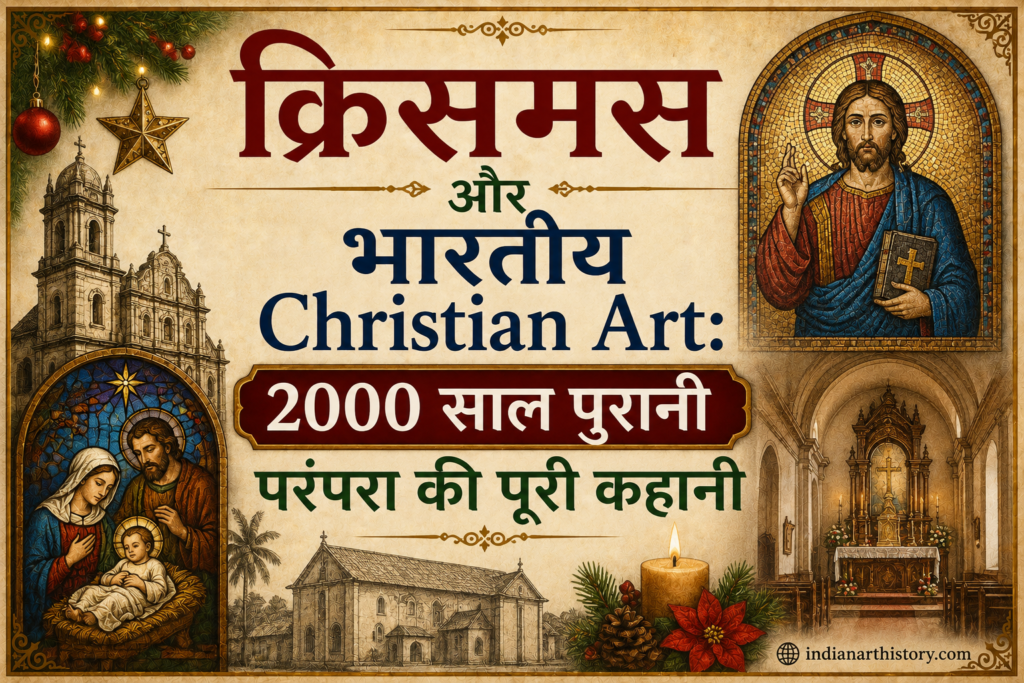
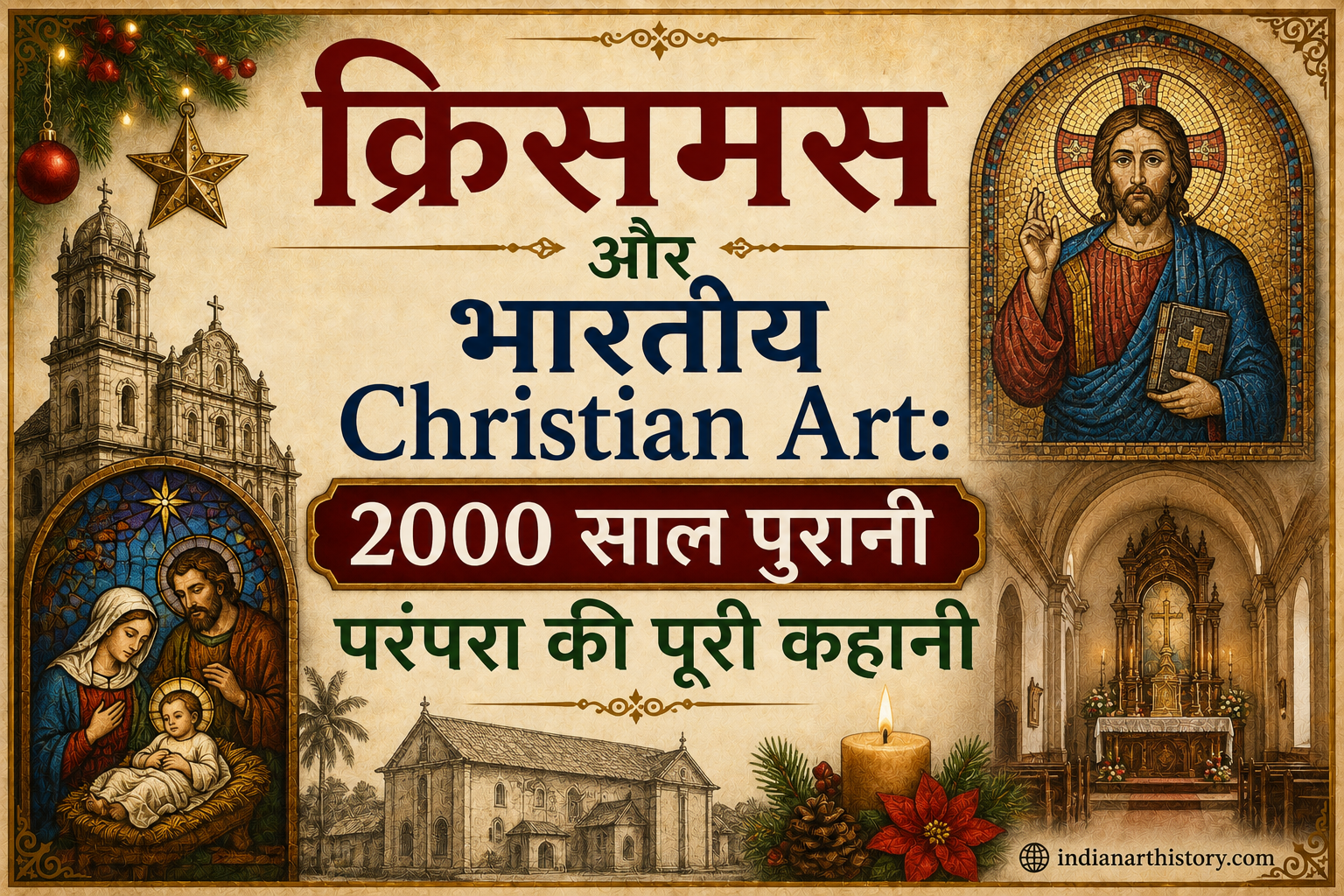
जानिए भारत में Christian Art का इतिहास — Goa के Presepios, Kerala की Syrian Christian परंपरा, Jamini Roy की Indian Jesus paintings, और Frank Wesley की Mughal style Nativity। क्रिसमस और भारतीय Christian Art की पूरी कहानी।
Table of Contents
क्रिसमस और भारतीय Christian Art
परिचय: भारत में Christian Art — 2000 साल पुरानी परंपरा
जब हम क्रिसमस की बात करते हैं, तो हमारे मन में चर्च की घंटियाँ, सजे हुए Christmas trees, और रंग-बिरंगी रोशनियाँ आती हैं। लेकिन क्या आप जानते हैं कि भारत में Christian Art की परंपरा लगभग 2000 साल पुरानी है? यह वह समय था जब Saint Thomas — जिन्हें “Doubting Thomas” भी कहा जाता है — 52 AD में Kerala के Malabar Coast पर आए थे। उनके आगमन के साथ ही भारत में एक नई कला-परंपरा का बीज पड़ा, जो सदियों तक फलती-फूलती रही।
भारतीय कला का इतिहास केवल मंदिरों और मूर्तियों तक सीमित नहीं है। यह उतना ही विविध और बहुरंगी है जितना भारत स्वयं। Christian Art ने भारतीय मिट्टी में आकर यहाँ की स्थानीय कला-शैलियों, रंगों, और परंपराओं को अपने भीतर समाहित किया। यही कारण है कि भारतीय Christian Art, यूरोपीय Christian Art से बिल्कुल अलग और अनूठी है।
भारत में Christianity का प्रवेश तीन अलग-अलग धाराओं में हुआ। पहली धारा Saint Thomas के साथ आई, दूसरी 16वीं शताब्दी में Portuguese missionaries के साथ, और तीसरी British colonial era में Protestant missionaries के साथ। इन तीनों धाराओं ने मिलकर भारतीय Christian कला की एक अत्यंत समृद्ध और जटिल विरासत का निर्माण किया।
क्रिसमस के त्योहार ने इस कला को एक नया आयाम दिया। Nativity scenes, Cribs, Church decorations, और religious paintings — इन सबने भारतीय कारीगरों के हाथों में जाकर एक नया जन्म लिया। एक ऐसा जन्म जिसमें Mary की साड़ी, Jesus की Indian features, और Wise Men के भारतीय वेशभूषा ने एक अनूठी visual language का निर्माण किया।
भारतीय कला परंपराओं के संदर्भ में देखें तो यह fusion केवल aesthetic नहीं था — यह एक गहरे सांस्कृतिक संवाद की अभिव्यक्ति थी। कला हमेशा संस्कृतियों के मिलन का सबसे सशक्त माध्यम रही है, और भारतीय Christian Art इसका सबसे उत्तम उदाहरण है।
इस लेख में हम इसी अनूठी कला-यात्रा को समझने की कोशिश करेंगे — Goa की Portuguese-influenced art से लेकर Kerala की Syrian Christian परंपरा तक, और Colonial era की Anglo-Indian art से लेकर contemporary artists तक।
Goa की Christian Art: Portuguese Influence + Indian Style
Goa — यह नाम सुनते ही हमारे मन में समुद्र की लहरें, सफेद चर्च, और रंगीन बाज़ार आते हैं। लेकिन Goa की असली पहचान उसकी वह अद्भुत कला-विरासत है जो Portuguese और Indian संस्कृतियों के मिलन से जन्मी। 1510 में जब Afonso de Albuquerque ने Goa पर कब्जा किया, तो उसके साथ आए Franciscan और Jesuit missionaries ने यहाँ एक नई कला-क्रांति की नींव रखी।
Goa की Church Architecture और Visual Art
Old Goa के churches — Basilica of Bom Jesus, Se Cathedral, और Church of St. Francis of Assisi — न केवल architectural masterpieces हैं, बल्कि इनमें जो paintings, sculptures, और decorative elements हैं, वे भारतीय-Portuguese fusion के सबसे उत्कृष्ट उदाहरण हैं। भारतीय स्थापत्य कला के विशेषज्ञ इन्हें Indo-Portuguese Baroque style का नाम देते हैं।
Basilica of Bom Jesus में जो gilded altar है, वह pure Portuguese Baroque style में बना है। लेकिन इसके आसपास के decorative panels में भारतीय motifs — कमल के फूल, पीपल की पत्तियाँ, और geometric patterns — साफ दिखाई देते हैं। यह वह जगह है जहाँ Saint Francis Xavier के अवशेष (relics) रखे हुए हैं, और हर साल क्रिसमस के आसपास यहाँ लाखों श्रद्धालु आते हैं।
Goan Christian Paintings की विशेषताएँ
16वीं और 17वीं शताब्दी में Goa में जो religious paintings बनाई गईं, उनमें एक अनूठी विशेषता थी — यूरोपीय iconography का भारतीय रंग-शैली में प्रस्तुतीकरण। भारतीय चित्रकला की परंपरा में जो flat perspective और bold outlines की शैली थी, वह इन paintings में साफ दिखती है।
इन paintings में Virgin Mary को अक्सर भारतीय महिला के रूप में चित्रित किया जाता था — गहरे रंग की skin tone, बड़ी आँखें, और कभी-कभी साड़ी जैसा वस्त्र। यह केवल artistic choice नहीं था, बल्कि इसके पीछे missionaries की यह सोच थी कि स्थानीय लोगों तक Christianity का संदेश उनकी अपनी visual language में पहुँचाया जाए।
Goa के Christian Sculptures
Goa में wood-carving और ivory-carving की एक समृद्ध परंपरा थी। Portuguese missionaries ने इन स्थानीय कारीगरों को Christian subjects — Jesus, Mary, Saints — बनाने के लिए प्रोत्साहित किया। इन कारीगरों ने भारतीय शिल्पकला की अपनी तकनीक और aesthetic sense को इन subjects पर लागू किया।
परिणाम था एक ऐसी sculpture जो formally Christian थी लेकिन aesthetically Indian। Jesus की मूर्तियाँ जिनमें Indian facial features थे, Mary की statues जिनमें Indian feminine grace थी — ये सब आज भी Goa के museums और churches में देखी जा सकती हैं।
Christmas और Goan Art
क्रिसमस के अवसर पर Goa की कला-परंपरा अपने पूरे वैभव में खिलती है। Nativity scenes बनाना — जिन्हें Goa में “Presepios” कहते हैं — एक पवित्र कला-साधना मानी जाती है। इन Presepios में Baby Jesus को Indian cradle में रखा जाता है, Wise Men Indian merchants की तरह दिखते हैं, और Angels में Indian classical dance के mudras की झलक मिलती है।
Kerala की Syrian Christian Art परंपरा
Kerala की Christian Art परंपरा Goa से बिल्कुल अलग है — यह Portuguese influence से नहीं, बल्कि Middle Eastern Syriac Christianity और Kerala की अपनी Dravidian art traditions के संगम से जन्मी है। Saint Thomas Christians — जिन्हें “Nasranis” भी कहते हैं — ने एक ऐसी कला-परंपरा विकसित की जो न पूरी तरह Eastern है, न पूरी तरह Western।
Syrian Christian Churches की Architecture
Kerala के Syrian Christian churches की architecture बेहद अनूठी है। इनमें Hindu temple architecture के तत्व — sloping roofs, deep eaves, और courtyard layout — Christian worship space के साथ मिले हुए हैं। भारतीय मंदिर स्थापत्य की परंपरा और Christian liturgical requirements का यह मिलन Kerala की एक अनोखी देन है।
Kottayam के Valiya Palli (St. Mary’s Church) और Cheriapalli — ये दोनों churches 16वीं शताब्दी के हैं और इनमें Syrian Christian art की सबसे शुद्ध अभिव्यक्ति मिलती है। इन churches की दीवारों पर बनी paintings में Syriac script, Indian facial features, और local flora-fauna का अद्भुत समन्वय है।
Payyammal Paintings — Kerala की अनूठी Christian Art
Kerala में एक विशेष painting tradition है जिसे “Payyammal” style कहते हैं। इन paintings में Christ और Mary को पूरी तरह Kerala के लोगों की तरह दिखाया जाता है। Kerala की पारंपरिक चित्रकला — जिसे Kerala Mural painting कहते हैं — का प्रभाव इन Christian paintings में स्पष्ट दिखता है।
Kerala Mural painting की विशेषताएँ — bold outlines, flat perspective, specific color palette (पीला, लाल, हरा, काला, सफेद) — ये सब Syrian Christian paintings में भी मिलती हैं। यह एक ऐसा उदाहरण है जहाँ एक Hindu/Buddhist art tradition ने Christian content को अपनाया और उसे पूरी तरह अपना बना लिया।
Syrian Christian Crosses — एक अनूठी Art Form
Kerala में “Mar Thoma Cross” — जिसे Persian Cross या Nasrani Menorah भी कहते हैं — एक विशेष religious symbol है। यह Cross पूरी तरह यूरोपीय crosses से अलग है। इसमें Syriac inscription, Indian lotus base, और Persian fire symbolism का मिलन है। भारतीय धार्मिक प्रतीक-कला में यह Cross एक unique position रखता है।
ये Crosses granite में बनाए जाते थे और इनकी carving की शैली Kerala के Hindu temple sculptures से प्रभावित थी। Mylappore (Chennai) का St. Thomas Mount Cross इसी tradition का सबसे प्रसिद्ध उदाहरण है।
Christmas in Kerala — Syrian Christian Style
Kerala में क्रिसमस मनाने का तरीका भी अनूठा है। यहाँ “Kalpavriksha” — यानी Christmas tree — की जगह पर लालटेनों से सजाए गए bamboo structures बनाए जाते हैं। Nativity scenes में Kerala के traditional costumes पहने हुए figures होते हैं। यह सब भारतीय लोक-कला परंपरा का एक जीवंत उदाहरण है।
Thiruvithamcode Arappally — India’s Oldest Church
Kerala में Thiruvithamcode (Kothanalloor) का Arappally church India का सबसे पुराना church माना जाता है — कुछ इतिहासकारों के अनुसार यह 57 AD में Saint Thomas द्वारा स्थापित किया गया था। यहाँ की art और architecture भारत की प्राचीनतम Christian कला का जीवंत संग्रहालय है।
Indian Jesus: जब Christ को Indian रूप में चित्रित किया
भारतीय कला के इतिहास में सबसे fascinating chapter वह है जब Indian artists ने Jesus Christ को पूरी तरह Indian रूप में चित्रित किया। यह केवल artistic experiment नहीं था — यह एक गहरे theological और cultural dialogue की अभिव्यक्ति थी।
“Sadhu” Jesus — AV Asirvatham की परंपरा
20वीं शताब्दी के आरंभ में भारत में एक नई movement शुरू हुई जिसे “Indigenization of Christianity” कहते हैं। इस movement के तहत artists ने Jesus को Indian Sadhu के रूप में चित्रित करना शुरू किया। भारतीय धार्मिक कला में Sadhu का जो image है — ochre robes, long hair, meditative pose — वही image Jesus को दिया गया।
AV Asirvatham और उनके समकालीन artists ने ऐसी paintings बनाईं जिनमें Jesus Himalayan background में, या village setting में, या Indian crowd के बीच दिखाई देते हैं। इन paintings में Indian miniature painting की तकनीक का इस्तेमाल किया गया।
Hemen Majumdar और Bengali Christian Art
Bengal में भी एक समृद्ध Christian Art tradition विकसित हुई। Hemen Majumdar (1894–1948) — जो primarily अपनी portrait paintings के लिए जाने जाते हैं — ने कुछ ऐसी paintings बनाईं जिनमें Christian subjects को Bengali setting में दिखाया गया। बंगाली कला परंपरा की जो softness और emotional depth है, वह इन paintings में Christ को एक बिल्कुल अलग dimension देती है।
Jamini Roy — एक क्रांतिकारी दृष्टि
Jamini Roy (1887–1972) शायद वह artist हैं जिन्होंने Indian Christian Art को सबसे radical रूप दिया। उन्होंने Bankura की Santhal tribal art और Kalighat painting से प्रेरित होकर ऐसी paintings बनाईं जिनमें Jesus, Mary, और Apostles पूरी तरह Indian tribal figures की तरह दिखते हैं।
Jamini Roy की paintings में Mary एक Bengali village woman हैं — बड़ी आँखें, dark complexion, simple attire। Jesus के चेहरे में एक Indian innocence और depth है। भारतीय आधुनिक कला में Jamini Roy का यह contribution अतुलनीय है। उन्होंने सिद्ध किया कि Christian theology को पूरी तरह Indian visual language में express किया जा सकता है।
उनकी प्रसिद्ध painting “The Three Kings” में Wise Men बिल्कुल Bengali bauls की तरह दिखते हैं — dhoti, gamcha, और उनके हाथों में offerings जो Indian rural life से लिए गए हैं।
Frank Wesley — Methodism और Indian Art का Sangam
Frank Wesley (1923–2002) — Agra में जन्मे इस Methodist artist ने भारतीय Miniature painting की Mughal और Rajput शैलियों का उपयोग करके Biblical scenes को पूरी तरह Indian context में present किया। उनकी paintings में Jesus की Sermon on the Mount एक Indian village में होती है, Last Supper में Indian food और utensils हैं, और Nativity scene एक Indian मुहल्ले में है।
Wesley की art ने पूरी दुनिया का ध्यान खींचा। उनकी paintings आज United Methodist Church के global publications में use होती हैं और उन्हें “the artist who gave Jesus an Indian face” कहा जाता है। यह उल्लेखनीय है कि Agra — जो Mughal कला के लिए जाना जाता है — ने ऐसे artist को जन्म दिया जिसने Christian art को Indian miniature की भाषा में express किया।
Surpanakha Mary — Feminist और Dalit Christian Art
आधुनिक भारत में एक नई movement उभरी है जो Dalit और feminist perspectives से Christian Art को देखती है। इसमें Mary को एक Dalit woman के रूप में, और Jesus को एक marginalized community के member के रूप में चित्रित किया जाता है। भारतीय समकालीन कला में यह एक powerful और provocative tradition है।
Anglo-Indian Art: Colonial Era की Mixed Style
British colonial era (1757–1947) में भारत में एक नई art tradition का उदय हुआ जिसे Anglo-Indian Art कहते हैं। यह tradition न पूरी तरह British थी, न पूरी तरह Indian — यह दोनों के बीच का एक fascinating middle ground था।
Company School of Painting
18वीं और 19वीं शताब्दी में East India Company के officers के लिए काम करने वाले Indian artists ने एक नई style विकसित की जिसे “Company School” या “Company Painting” कहते हैं। Company Painting की परंपरा में Indian artists ने Western techniques — perspective, shading, oil colors — को अपनी traditional style के साथ मिलाया।
इस school के कुछ artists ने Christian subjects भी paint किए, खासकर जब British patrons ने ऐसी demand की। इन paintings में Indian environment में Biblical scenes दिखाए जाते थे — Jesus एक Indian bazaar में teaching कर रहे हैं, या Mary एक Indian garden में बैठी हैं।
Ravi Varma और Christian Art
Raja Ravi Varma (1848–1906) — जिन्हें आमतौर पर Hindu mythology की paintings के लिए जाना जाता है — ने कुछ Christian subjects भी paint किए। उनकी technique पूरी तरह Western academic realism की थी, लेकिन उनके models भी Indian थे। राजा रवि वर्मा की कला में Hindu और Christian दोनों traditions का समान सम्मान है।
Ravi Varma की Mary और Christ की paintings में वही Indian beauty और grace है जो उनकी Lakshmi और Saraswati में है। इससे एक interesting question उठता है — क्या एक ही artist का vision दो अलग-अलग religious traditions को एक shared aesthetic space में ला सकता है?
Anglo-Indian Community और Christmas Traditions
Anglo-Indian community — जो British और Indian ancestry का मिश्रण है — ने Christmas को मनाने की एक अपनी अनोखी tradition विकसित की। इनके घरों में Christmas decorations में Indian और Western elements का मिलन होता था। भारतीय लोक-कला के elements — जैसे rangoli Christmas star के आकार में, या clay figures से बनी Nativity — इस community की अनूठी cultural identity को express करते थे।
Calcutta (अब Kolkata), Madras (अब Chennai), और Bombay (अब Mumbai) के Anglo-Indian churches में जो Christmas decorations होती थीं, वे इस mixed aesthetic का सुंदर उदाहरण थीं।
Indian Christian Furniture और Decorative Arts
Colonial era में Goa, Kerala, और Tamil Nadu में एक विशेष furniture-making tradition विकसित हुई जिसे “Indo-Portuguese furniture” कहते हैं। इस furniture में Christian imagery — crosses, angels, saints — को Indian carving techniques और local wood के साथ मिलाया जाता था।
भारतीय शिल्प-कला की इस tradition में rosewood और teak पर की गई carving आज भी antique collectors में बेहद लोकप्रिय है। Christmas के अवसर पर इस furniture पर special decorations की जाती थीं।
Christmas Cribs in Goa: एक अनोखी Indian-Christian Art Tradition
अगर भारत में Christmas Art की बात होती है, तो Goa के Christmas Cribs — जिन्हें “Presepios” कहते हैं — का ज़िक्र अवश्य होता है। यह भारतीय Christmas कला की सबसे जीवंत और popular tradition है।
Presepios का इतिहास
Presepio (plural: Presepios) इतालवी शब्द है जिसका अर्थ है “manger” या “crib”। Saint Francis of Assisi ने 1223 में पहला living Nativity scene बनाया था। इस tradition को Franciscan missionaries Goa लेकर आए, और यहाँ के local artists ने इसे अपनी तरह से ढाल लिया।
16वीं शताब्दी से Goa में Presepios बनाने की tradition शुरू हुई। Goa की कला-परंपरा में Presepios केवल religious display नहीं है — यह एक complete art form है जिसमें sculpture, painting, architecture, और landscape design — सब कुछ एक साथ आता है।
Goan Presepios की विशेषताएँ
Goan Presepios की सबसे बड़ी विशेषता यह है कि इसमें Bethlehem की कहानी को Goa के landscape में रखा जाता है। Baby Jesus एक Goan house में पैदा होते हैं, चरवाहे Goan fishermen की तरह दिखते हैं, और Wise Men Portuguese merchants जैसे वेशभूषा में आते हैं।
इन Presepios में use होने वाली figures — जिन्हें “Presepio figures” कहते हैं — पारंपरिक रूप से terracotta या papier-mâché में बनाई जाती हैं। भारतीय मूर्तिकला की परंपरा में जो attention to detail और expressive quality है, वह इन figures में साफ दिखती है।
Old Goa के बड़े Presepios
Christmas के दौरान Goa के बड़े churches — विशेषकर Old Goa के churches — में विशाल Presepios बनाए जाते हैं। ये Presepios कभी-कभी पूरे एक कमरे को कवर करते हैं और इनमें सैकड़ों figures होती हैं।
इन बड़े Presepios को बनाने में कई weeks लगते हैं और पूरा परिवार — बच्चे, बड़े, बुजुर्ग — सब मिलकर काम करते हैं। भारतीय पारिवारिक कला-परंपरा में यह community participation का एक सुंदर उदाहरण है।
Konkani भाषा और Presepio Art
Goa में Presepios के साथ जो songs गाई जाती हैं — जिन्हें “Mando” और “Dulpod” कहते हैं — वे Konkani भाषा में हैं। इन songs में Christian theology और Indian poetry का अनूठा मिलन है। Music और Visual Art का यह combination भारतीय सांस्कृतिक परंपरा की एक विशेषता है।
Contemporary Presepios — New Trends
आज Goa में Presepios बनाने की tradition evolve हो रही है। युवा artists अब eco-friendly materials — bamboo, recycled paper, natural colors — का उपयोग करके Presepios बना रहे हैं। कुछ artists ने Presepios में current social issues — climate change, poverty, gender equality — को भी include किया है। समकालीन भारतीय कला में यह trend देखा जा रहा है कि traditional forms को contemporary relevance दी जाए।
Mangalore और Mumbai के Cribs
Goa के अलावा Mangalore और Mumbai में भी Christmas Cribs की एक समृद्ध tradition है। Mangalore के Konkani Catholics और Mumbai के East Indian Catholics ने अपनी अलग Crib-making traditions विकसित की हैं। भारत के coastal Christian communities की यह कला-परंपरा UNESCO की intangible cultural heritage list में शामिल होने की दावेदार है।
Contemporary Indian Christian Artists
भारतीय समकालीन कला में Christian themes को नए तरीकों से explore करने वाले कई महत्वपूर्ण artists हैं। इन artists ने traditional Christian iconography को Indian materials, techniques, और social contexts के साथ मिलाकर कुछ बिल्कुल नया और powerful बनाया है।
Jyoti Sahi — Art Ashram और Inculturation
Jyoti Sahi (जन्म 1944) भारत के सबसे महत्वपूर्ण Christian artists में से एक हैं। उन्होंने Bangalore के पास एक “Art Ashram” की स्थापना की जहाँ Christian spirituality और Indian art traditions का संगम होता है। Jyoti Sahi की कला में Hindu iconography, Tantric symbols, और Christian theology एक साथ आते हैं।
उनकी paintings में Christ को अक्सर Cosmic Dancer के रूप में दिखाया जाता है — Shiva की Nataraja pose में, लेकिन Cross के साथ। यह एक bold और thought-provoking artistic statement है। Christmas के अवसर पर उनकी Nativity paintings में Indian village life की vivid imagery होती है।
Angelo da Fonseca — Pune का Pioneering Artist
Angelo da Fonseca (1902–1967) — Pune में जन्मे इस artist ने Indian Christian Art में जो contribution दिया वह अतुलनीय है। उन्होंने अपनी paintings में South Indian classical painting की techniques — particularly Tanjore painting style — का उपयोग करके Biblical stories को पूरी तरह Indian रूप में present किया।
Tanjore painting की परंपरा में जो gold leaf work और rich colors हैं, उन्हें da Fonseca ने Christ की life के scenes में apply किया। उनकी Nativity paintings में Baby Jesus एक Indian पालने में हैं, Mary एक South Indian woman की तरह dressed हैं, और पूरा scene एक Indian village में है।
Solomon Raj — Andhra Pradesh की Kalamkari Tradition
Solomon Raj (1921–2019) — Andhra Pradesh के इस artist ने Kalamkari painting की ancient tradition का उपयोग Biblical stories को depict करने के लिए किया। Kalamkari में जो natural dyes, hand-drawn figures, और narrative scroll tradition है, उसे उन्होंने Old और New Testament की stories के लिए adapt किया।
उनका काम देखते हुए आप समझ सकते हैं कि कैसे एक 3000 साल पुरानी Indian textile tradition को Christian narrative art में seamlessly integrate किया जा सकता है। Christmas के scenes उनकी Kalamkari panels में जीवंत हो उठते हैं।
Lucy D’Souza — Feminist Christian Art
Lucy D’Souza एक contemporary Goan artist हैं जो अपनी paintings में Mary को एक powerful, independent Indian woman के रूप में दिखाती हैं। भारतीय Feminist कला की tradition में उनका काम एक महत्वपूर्ण voice है।
उनकी Christmas paintings में Mary की expression submissive नहीं, बल्कि determined और strong है। यह एक contemporary Indian woman की आत्मा है जो एक ancient story में प्रतिबिंबित होती है।
Lino Ponoppadan — Kerala की New Generation
Kerala में एक नई generation के artists Christian themes को Kerala’s contemporary social reality से जोड़ रहे हैं। Kerala की आधुनिक कला में यह trend बहुत interesting है — traditional Syrian Christian imagery और contemporary social commentary का यह मिलन।
P. Thankappan — Northeast India की Christian Art
Northeast India — Nagaland, Mizoram, Manipur — में Christianity majority religion है और यहाँ की tribal Christian art एक अलग chapter है। यहाँ के artists ने tribal motifs, weaving patterns, और indigenous imagery को Christian iconography के साथ मिलाया है।
Nagaland के Christmas celebrations में जो visual art होती है — church decorations, Christmas cards, Nativity scenes — उनमें Naga tribal aesthetic साफ दिखता है। यह भारत में Christian Art की geographic diversity का एक उत्कृष्ट उदाहरण है।
परीक्षा उपयोगी तथ्य
भारतीय कला और संस्कृति के परीक्षार्थियों के लिए नीचे दिए गए तथ्य महत्वपूर्ण हैं:
ऐतिहासिक तथ्य:
- 52 AD — Saint Thomas Kerala के Malabar Coast पर आए और भारत में Christianity की नींव रखी।
- 1510 — Portuguese ने Goa पर कब्जा किया और Indo-Portuguese Christian Art की शुरुआत हुई।
- 1557 — Goa में पहली Indian printing press स्थापित हुई जिसने Christian Art के प्रसार में मदद की।
- 1605 — Old Goa का Se Cathedral पूरा हुआ — यह Asia का सबसे बड़ा church माना जाता है।
- 1946 — Goa की Basilica of Bom Jesus UNESCO World Heritage Site बनी।
कला-शैलियाँ:
- Indo-Portuguese Baroque — Goa की प्रमुख church art style।
- Kerala Mural Style में Christian Art — Syrian Christian churches में उपयोग।
- Company Painting — Colonial era में Indian artists द्वारा विकसित।
- Kalamkari Christian Art — Andhra Pradesh में Solomon Raj द्वारा develop की गई।
- Tanjore Style Christian Paintings — Angelo da Fonseca का contribution।
महत्वपूर्ण Artists:
- Jamini Roy — Bengali Christian Art के pioneer, tribal style में Jesus को paint किया।
- Frank Wesley — “Indian face of Jesus,” Mughal miniature style का उपयोग।
- Jyoti Sahi — Art Ashram founder, Inculturation का concept।
- Angelo da Fonseca — Tanjore style में Biblical paintings।
- Solomon Raj — Kalamkari technique में Biblical narratives।
महत्वपूर्ण स्थान:
- Basilica of Bom Jesus, Goa — Saint Francis Xavier के relics, UNESCO World Heritage।
- St. Thomas Mount, Chennai — जहाँ Saint Thomas को martyrdom मिली।
- Valiya Palli, Kottayam — Kerala की oldest Syrian Christian churches में से एक।
- Thiruvithamcode Arappally, Kerala — India का possibly oldest church, 57 AD।
Christmas Art विशेष:
- Presepio/Presepios — Goa की Nativity scene tradition, Franciscan missionaries द्वारा introduce।
- Kalpavriksha — Kerala में Christmas के लिए bamboo lantern structures।
- Mar Thoma Cross — Kerala का unique Christian cross जिसमें Persian, Syriac, और Indian elements हैं।
भारतीय कला परीक्षाओं में यह तथ्य बार-बार आते हैं। इन्हें ध्यान से याद करें।
FAQs
Q1. भारत में Christian Art की शुरुआत कब हुई?
भारत में Christian Art की शुरुआत 52 AD में मानी जाती है जब Saint Thomas Kerala में आए। हालाँकि, formally documented Christian Art tradition 16वीं शताब्दी से मिलती है जब Portuguese missionaries Goa आए। भारत में Christian Art का विस्तृत इतिहास जानने के लिए आप हमारी website पर उपलब्ध resources देख सकते हैं।
Q2. Jamini Roy ने Christian Art में क्या योगदान दिया?
Jamini Roy ने Bankura की tribal art और Kalighat painting style का उपयोग करके Jesus, Mary, और Apostles को पूरी तरह Indian tribal figures की तरह paint किया। उनकी paintings में Christian theology को Indian visual language में express किया गया। उनकी “The Three Kings” painting विशेष रूप से प्रसिद्ध है।
Q3. Goa के Presepios क्या हैं?
Presepios Goa की Christmas Nativity scene tradition है जो Franciscan missionaries द्वारा 16वीं शताब्दी में introduce की गई। इसमें Bethlehem की कहानी को Goa के local landscape और characters के साथ present किया जाता है। Goa की Christian Art traditions में Presepios सबसे popular और distinctive है।
Q4. Kerala की Syrian Christian Art क्या है?
Kerala की Syrian Christian Art वह tradition है जो Saint Thomas Christians (Nasranis) ने विकसित की। इसमें Kerala Mural painting की techniques, Syrian Syriac elements, और Indian iconography का मिलन है। Mar Thoma Cross इस tradition का सबसे iconic symbol है।
Q5. Frank Wesley कौन थे?
Frank Wesley (1923–2002) Agra में जन्मे एक Methodist Christian artist थे जिन्होंने Mughal और Rajput miniature painting की techniques का उपयोग Biblical scenes को paint करने के लिए किया। उन्हें “the artist who gave Jesus an Indian face” कहा जाता है और उनकी paintings आज United Methodist Church के global publications में उपयोग होती हैं।
Q6. क्या Indian Christian Art को UNESCO ने मान्यता दी है?
Old Goa के churches — जिनमें Basilica of Bom Jesus और Se Cathedral शामिल हैं — 1986 में UNESCO World Heritage Site बने। Goa की church architecture इस मान्यता की सबसे बड़ी लाभार्थी है। Goa के Presepios और Kerala के Syrian Christian crosses की intangible heritage के रूप में मान्यता के लिए प्रयास जारी हैं।
Q7. भारत में Christmas Art में कौन-कौन से Indian elements मिलते हैं?
भारतीय Christmas Art में कमल के फूल, Indian facial features, साड़ी और dhoti पहने figures, Mural painting के colors, tribal motifs, Kalamkari designs, Tanjore gold-work, और village Indian settings जैसे elements मिलते हैं। भारतीय कला के Indian elements का यह विविधता Christmas Art को एक अनूठा character देती है।
Q8. Northeast India में Christian Art की क्या परंपरा है?
Northeast India — Nagaland, Mizoram, Manipur — में tribal Christian art की एक अलग परंपरा है। यहाँ के artists ने tribal motifs और weaving patterns को Christian iconography के साथ मिलाया है। Christmas celebrations में Naga, Mizo, और Meitei tribal aesthetics का प्रभाव साफ दिखता है।
निष्कर्ष
भारतीय Christian Art एक ऐसा विषय है जो हमें याद दिलाता है कि भारत हमेशा से एक confluence of civilizations रहा है। यहाँ आई हर tradition ने भारत की मिट्टी में आकर कुछ नया और अनूठा जन्म लिया।
क्रिसमस — जो पश्चिम का त्योहार माना जाता है — भारत में एक बिल्कुल अलग रूप में मनाया जाता है। Goa के Presepios में, Kerala के lantern structures में, Tamil Nadu की Tanjore paintings में, Bengal की tribal-style Nativity में — हर जगह Christmas एक Indian experience है।
Jamini Roy की tribal Mary, Frank Wesley की Mughal miniature Christ, Jyoti Sahi की Nataraja-inspired Jesus, Solomon Raj की Kalamkari Nativity — ये सब इस बात के प्रमाण हैं कि Art में सबसे बड़ी ताकत होती है transformation की — किसी भी idea को, किसी भी story को, अपनी भाषा में, अपने रंगों में, अपने रूप में express करने की।
भारत की यह कला-परंपरा दुनिया को यह सिखाती है कि cultural dialogue कैसे होता है — conflict से नहीं, बल्कि creativity से। Christmas इसी creativity का उत्सव है — और भारतीय Christian Art इसी उत्सव की सबसे खूबसूरत अभिव्यक्ति।
हमसे जुड़ें:
भारतीय कला और इतिहास के बारे में और जानकारी के लिए हमारे WhatsApp Channel — Indian Art History से जुड़ें और हमें Facebook पर — Indian Art History पर follow करें। नई posts, articles, और art history updates सबसे पहले पाने के लिए आज ही join करें।
यह लेख indianarthistory.com के लिए लिखा गया है। सभी तथ्य historical research पर आधारित हैं।