Table of Contents
Introduction to Mughal Court Painting
When we talk about Indian miniature painting, one name shines brighter than the rest—Mughal painting. It wasn’t just an art style; it was a visual language of power, culture, history, and refinement. At the heart of this artistic revolution were the major artists of the Mughal court, masters who transformed manuscripts and walls into living stories.
What Made Mughal Painting Unique
Imagine blending Persian elegance with Indian vitality—that’s Mughal painting in a nutshell. It combined:
- Persian finesse
- Indian realism
- Central Asian aesthetics
The result? Art that felt alive, detailed, and deeply human.
Persian Roots and Indian Soul
Mughal painting began with Persian artists but soon absorbed Indian themes, colors, and emotions. This fusion made Mughal art both royal and relatable.
Rise of Mughal Painting Under the Emperors
Babur and the Early Foundations
Babur loved gardens and nature, but painting hadn’t fully bloomed during his reign. Still, he planted the seed.
Humayun’s Persian Influence
Humayun changed everything. During his exile in Persia, he met master artists Mir Sayyid Ali and Abd al-Samad—and brought them back to India. That single decision reshaped Indian art forever.
Akbar – The True Patron of Mughal Art
Akbar didn’t just support art—he institutionalized it. He set up royal workshops (karkhanas) and employed hundreds of artists. This is when Mughal painting truly flourished.
Jahangir – The Connoisseur Emperor
Jahangir had an eye for detail sharper than any emperor before him. Portraits, animals, and nature studies reached peak realism under his reign.
Shah Jahan – Art of Elegance and Luxury
Think symmetry, beauty, and refinement. Shah Jahan’s era emphasized elegance, decorative richness, and courtly sophistication.
Aurangzeb and the Decline of Patronage
Aurangzeb wasn’t anti-art—but he wasn’t a patron either. Without royal support, Mughal painting slowly declined.
Organization of the Mughal Court Atelier (Karkhana)
Teamwork in Mughal Painting
Unlike modern artists, Mughal paintings were often collaborative. One artist sketched, another colored, another finished details.
Role of Head Artists and Assistants
Senior artists designed compositions, while junior painters filled colors and backgrounds. It was like a well-run studio.
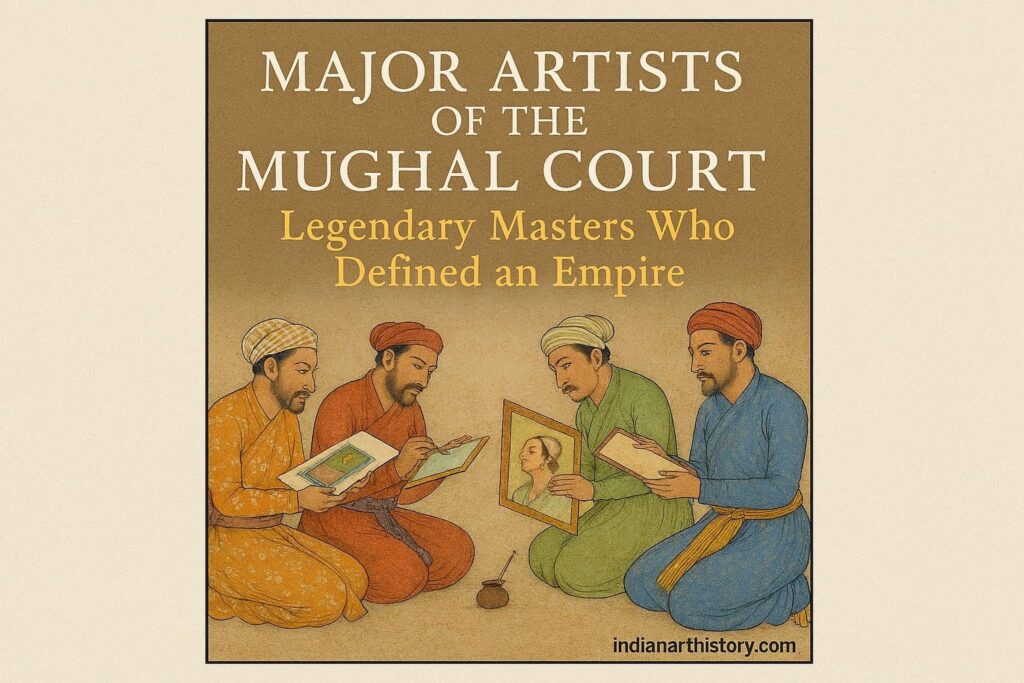
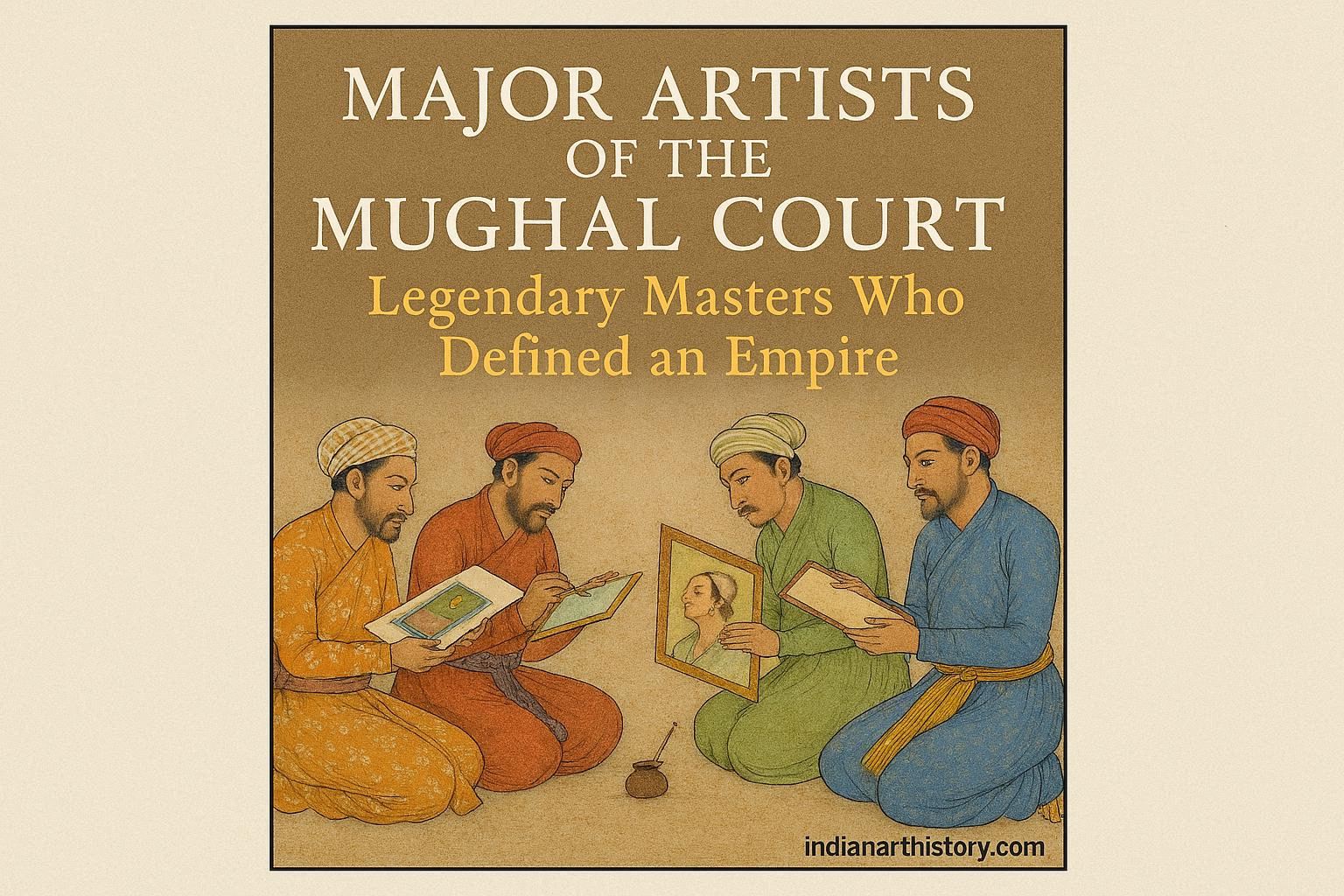
Major Artists of the Mughal Court
Now let’s meet the real stars—the artists who defined Mughal art.
Mir Sayyid Ali
A Persian master brought by Humayun. Known for delicate compositions and refined technique. One of the founders of Mughal painting.
Abd al-Samad
Another Persian genius. Famous for blending Persian style with Indian themes. Later became a high-ranking court official.
Basawan
A genius of realism. Basawan introduced depth, shading, and emotional expression. One of Akbar’s favorite artists.
Daswanth
A student of Basawan with extraordinary imagination. Sadly, his life was short, but his expressive style left a deep impact.
Kesu Das
Known for portraiture and historical scenes. His work shows excellent observation of human features.
Miskin
Specialized in illustrations of court life and narratives. His compositions were balanced and lively.
Farrukh Beg
A master of portrait painting. His figures are elegant, refined, and sophisticated—perfect for royal subjects.
Abu’l Hasan
Nicknamed Nadir-uz-Zaman (Wonder of the Age). Jahangir’s favorite painter. Known for lifelike portraits and animals.
Bichitr
Famous for symbolic and allegorical paintings. His work often carried moral or philosophical meanings.
Govardhan
Excelled in portraiture and court scenes. His figures show personality and psychological depth.
Payag
Renowned for group compositions and festival scenes. His paintings feel dynamic and festive.
Manohar
Son of Basawan. Continued his father’s realistic tradition with softer modeling.
Murad
Known for decorative elements and architectural backgrounds.
Hashim
Worked extensively during Shah Jahan’s reign, focusing on elegance and symmetry.
Themes and Subjects Painted by Mughal Artists
Court Scenes and Royal Portraits
Kings, princes, durbars, hunts—Mughal artists documented royal life like visual historians.
Historical Manuscripts
Illustrations of:
- Akbarnama
- Baburnama
- Razmnama
These were history books in color.
Nature Studies and Animals
Under Jahangir, animals were painted with scientific precision—almost like wildlife photography.
Religious and Mythological Subjects
Though Islamic in rule, Mughal artists illustrated Hindu epics like the Mahabharata with great respect.
Techniques and Style of Mughal Artists
Naturalism and Realism
Faces had expressions. Bodies had weight. Scenes had depth. Mughal artists observed life closely.
Use of Perspective and Shading
They used light and shadow to create three-dimensional effects—rare in Indian art before them.
Color Palette and Fine Brushwork
Mineral colors, gold, and ultra-fine brushes made details breathtaking.
Mughal Artists and Their Legacy
Influence on Rajput and Deccan Painting
Rajput schools adopted Mughal realism, while keeping local flavors.
Mughal Art in Modern Indian Art History
Modern Indian realism owes a silent debt to Mughal masters.
Importance of Mughal Court Artists for Exams and Research
For:
- TGT / PGT Art exams
- UGC NET
- Art history students
Knowing major Mughal artists is non-negotiable.
Conclusion
The major artists of the Mughal court were not just painters—they were storytellers, historians, and innovators. Their brushes captured emperors, emotions, and entire eras. Even centuries later, their work whispers stories of power, beauty, and artistic brilliance. Mughal painting wasn’t just royal art—it was India finding itself on paper.
FAQs
1. Who was the greatest Mughal court painter?
Basawan and Abu’l Hasan are often considered the greatest due to realism and innovation.
2. Which Mughal emperor patronized art the most?
Akbar was the biggest patron of Mughal painting.
3. Who introduced Persian style to Mughal painting?
Mir Sayyid Ali and Abd al-Samad.
4. What is the main feature of Mughal painting?
Naturalism, fine detailing, and realism.
5. Why did Mughal painting decline?
Lack of royal patronage during Aurangzeb’s reign.